Balfron Tower
Balfron Tower, 146 homes in Poplar, was built by the state and neglected by the state. It was sold, on HARCA's account, so that the building could be saved, though not its social housing.
In 2014 its landlord, Poplar HARCA, valued the tower as social housing at minus £4.03m. Kept as social rented homes, it would cost more to run and repair than it earned. That is a valuation, not a repair bill.
The last tenants had been moved out by March 2015; HARCA says 95% stayed in Tower Hamlets. The refurbished flats went on sale in 2019, and Novara Media reported in 2023 that none of the 139 relaunched in 2022 had sold. Since January 2024, 140 flats have been managed for private rent.
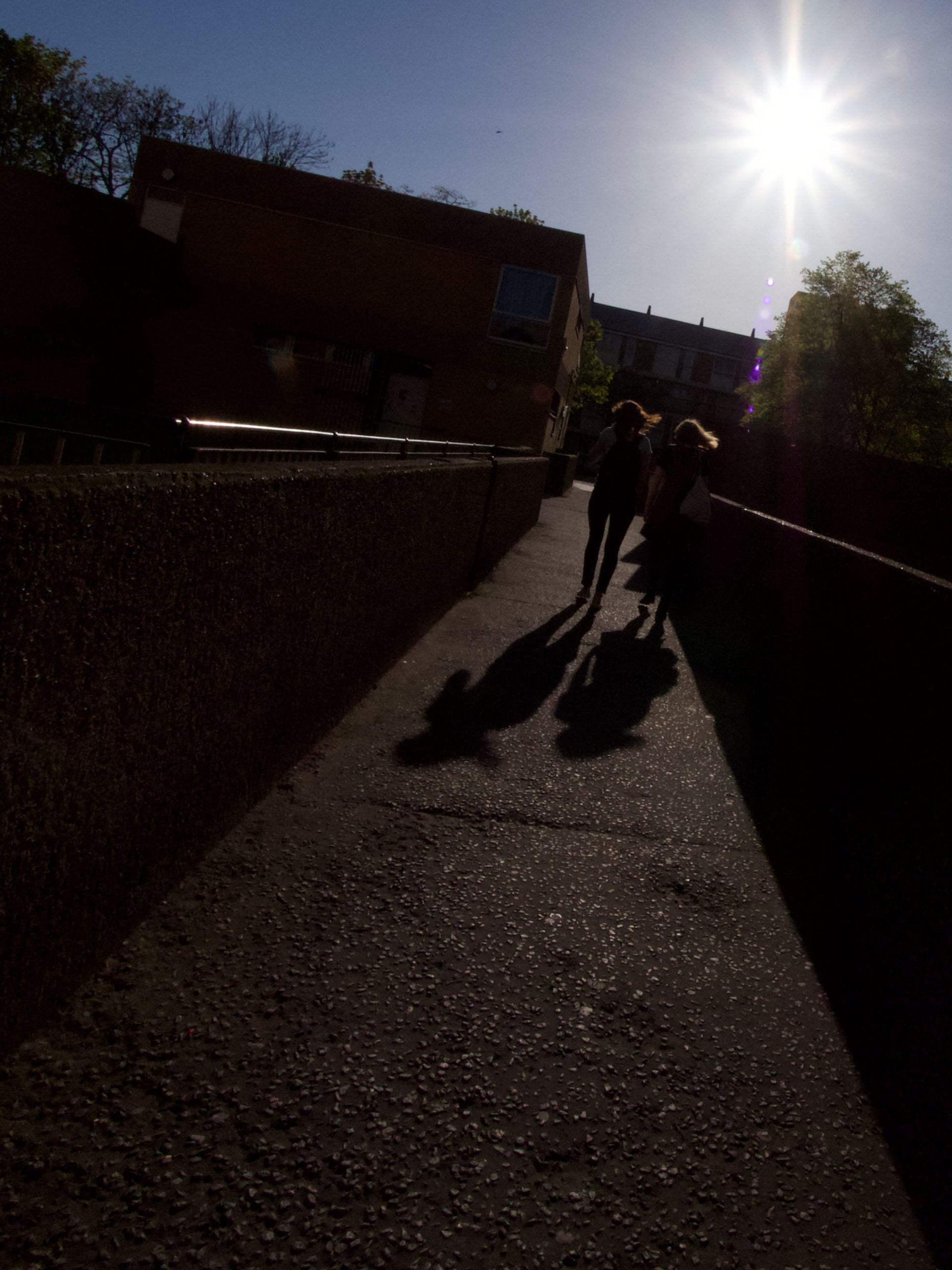
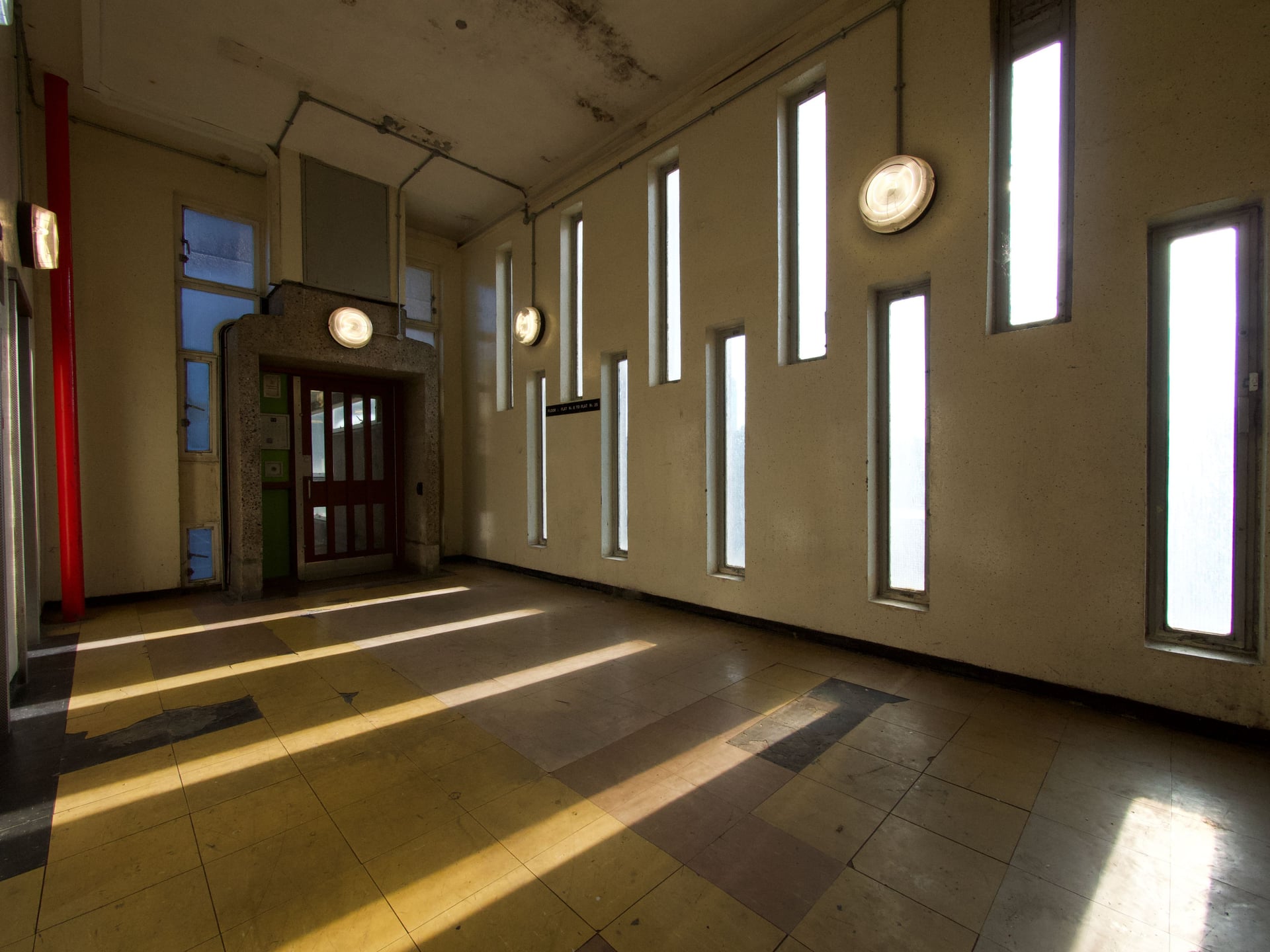
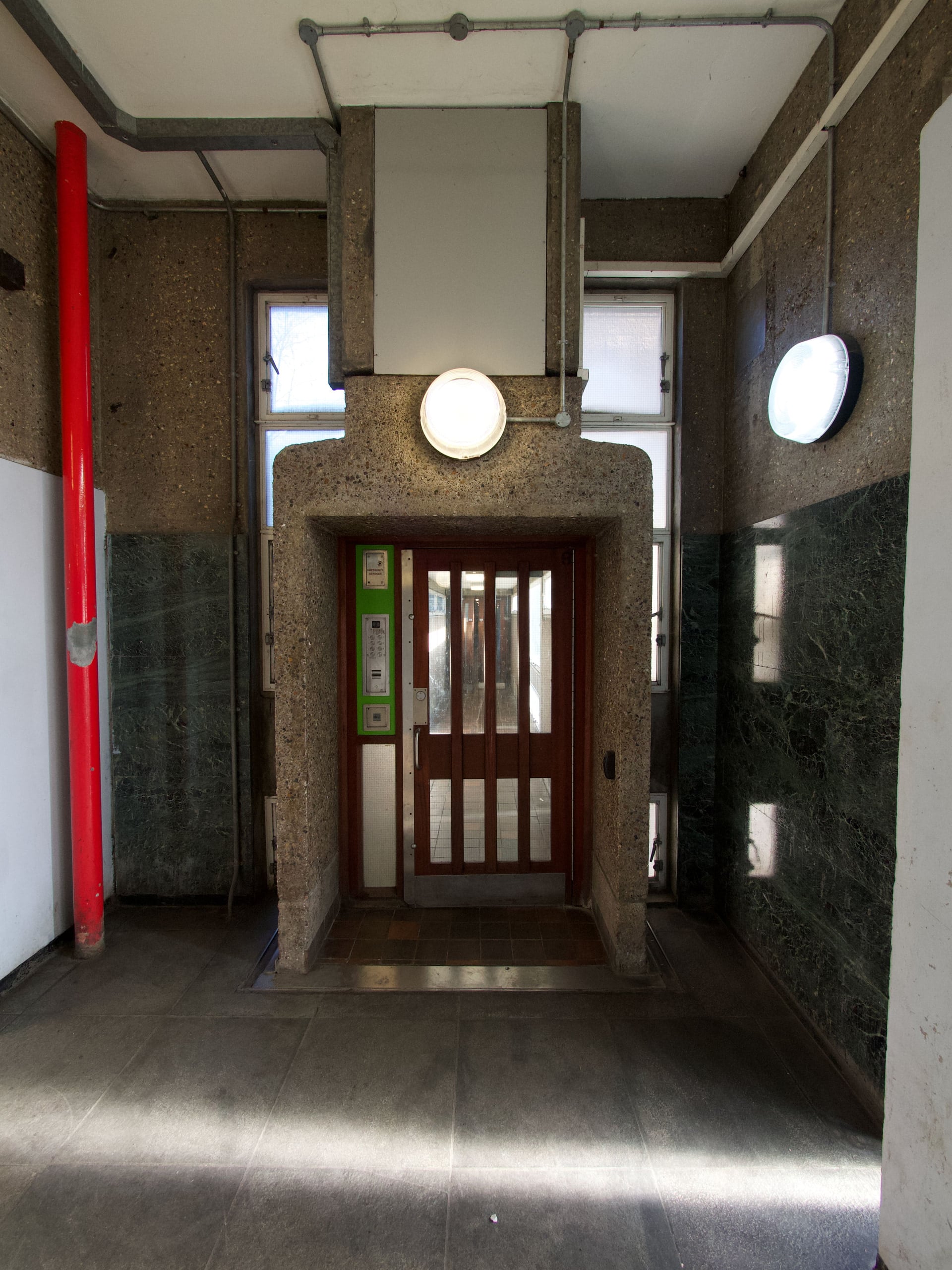
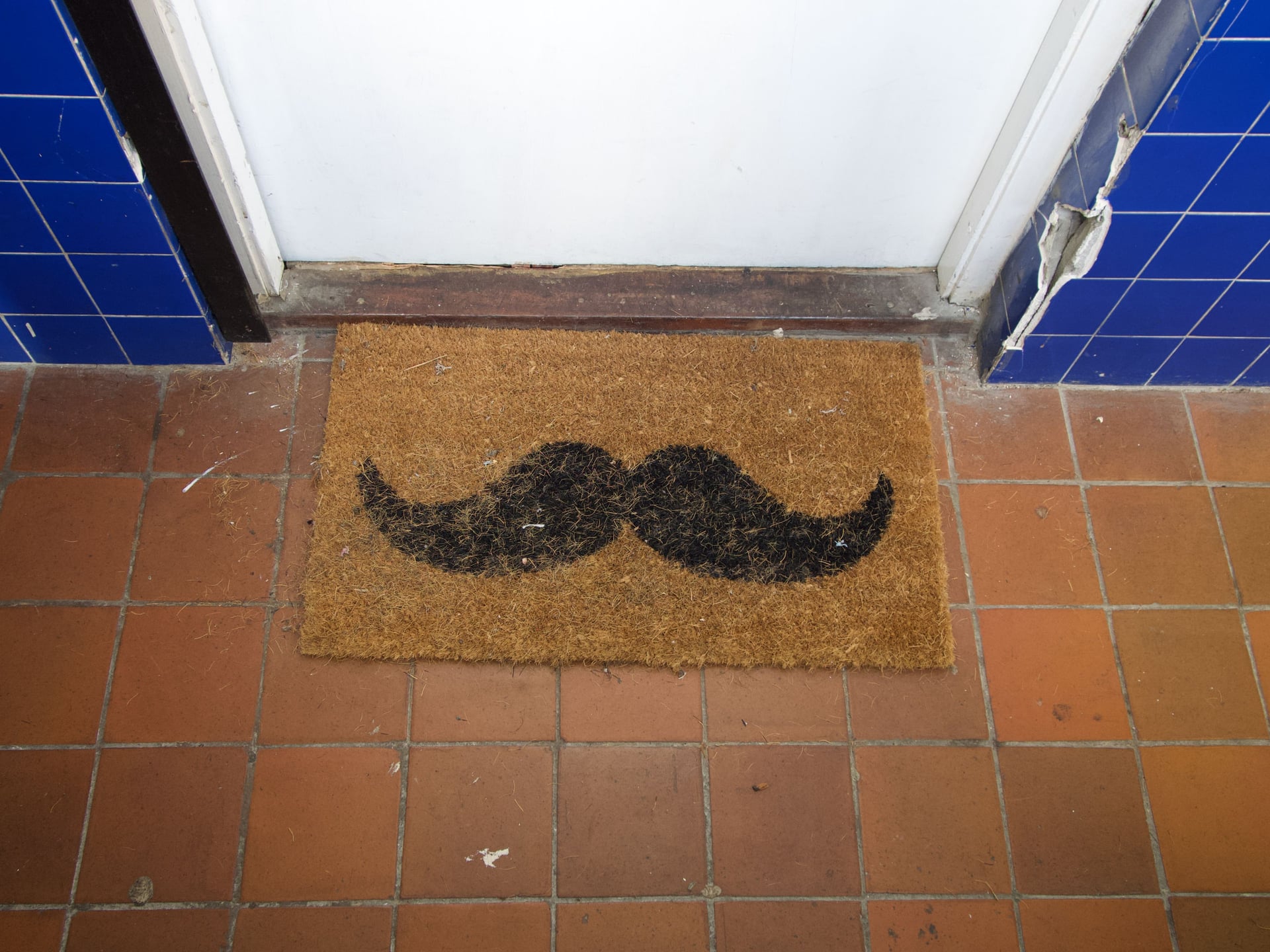
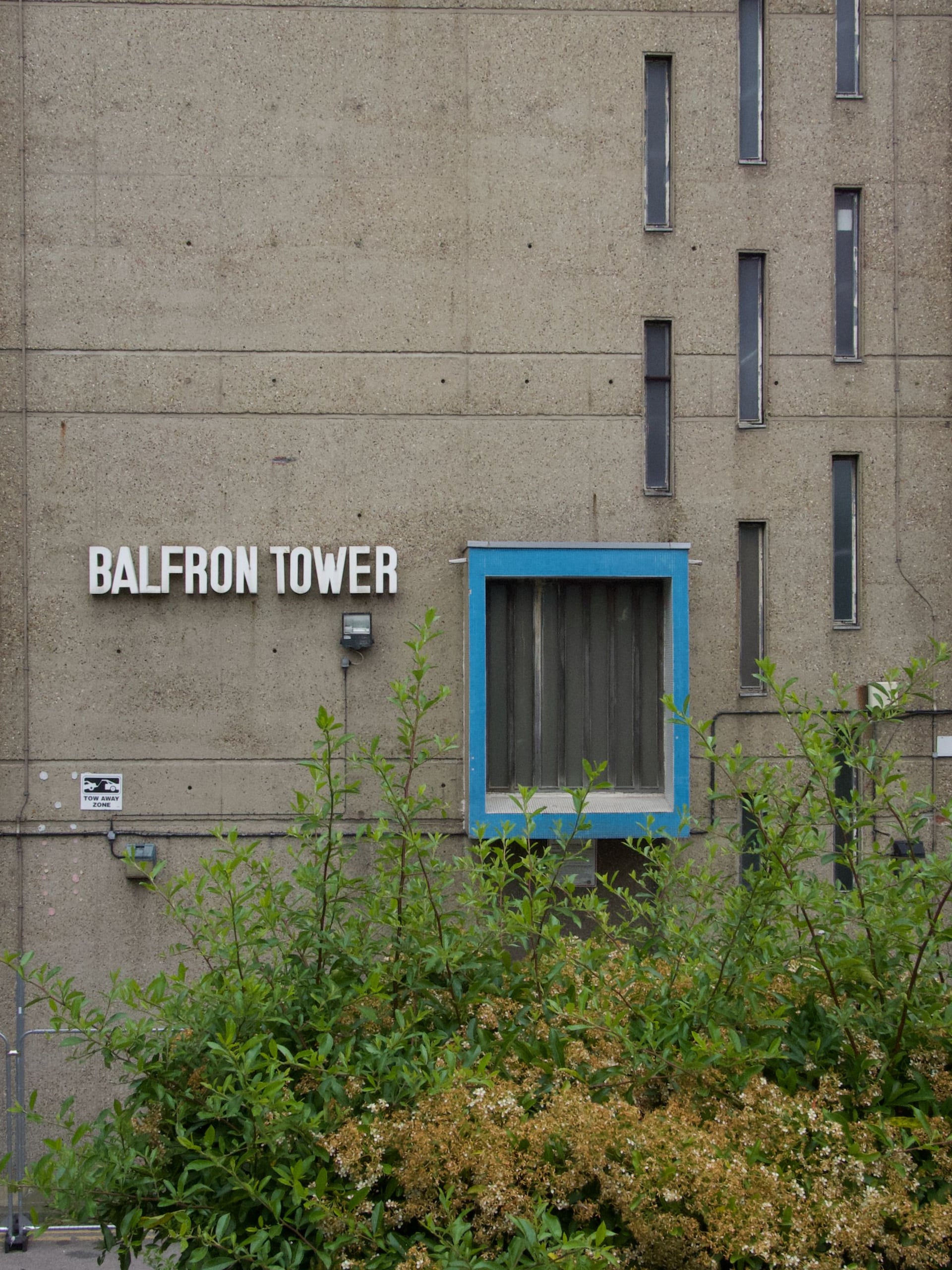
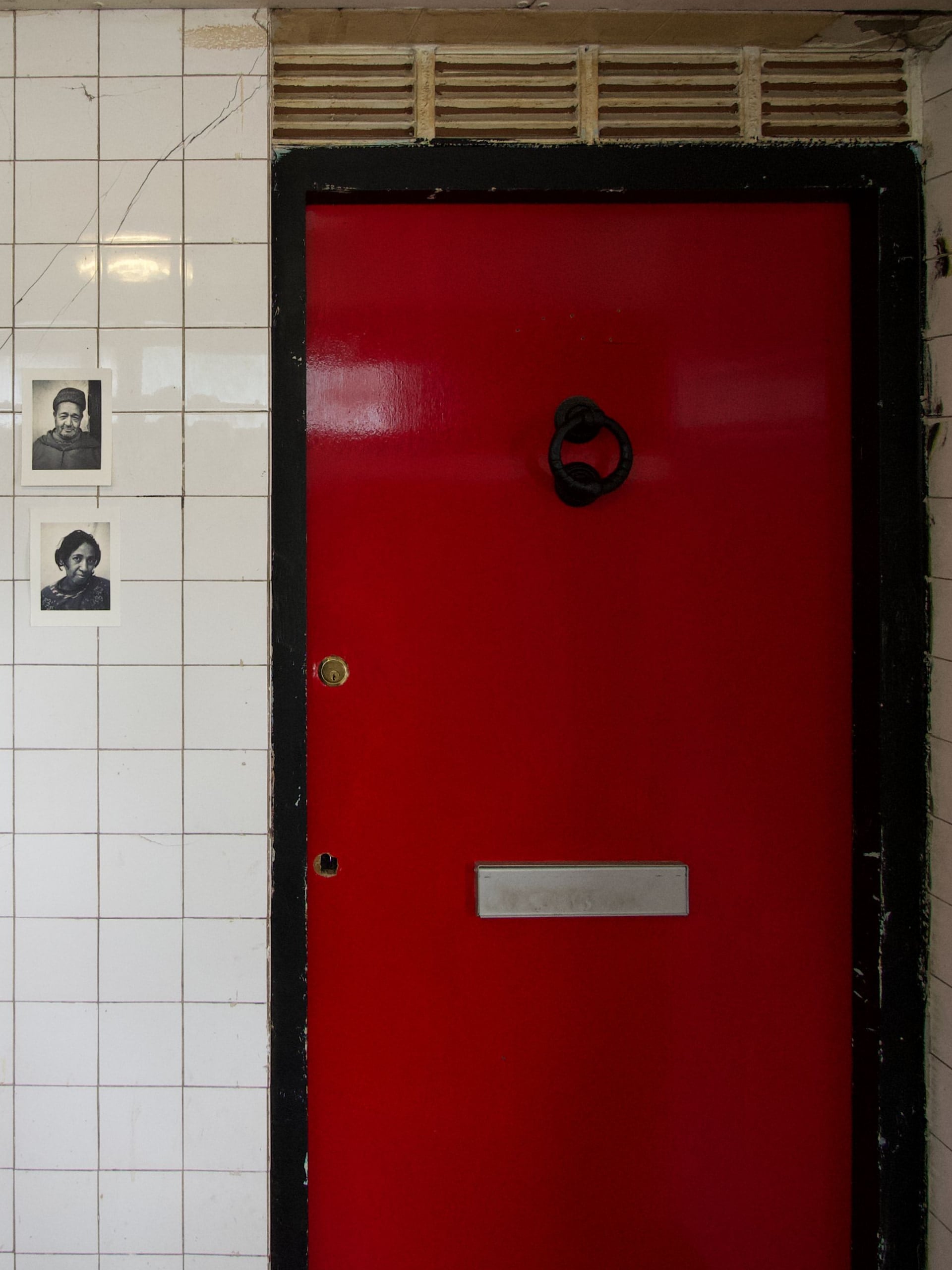
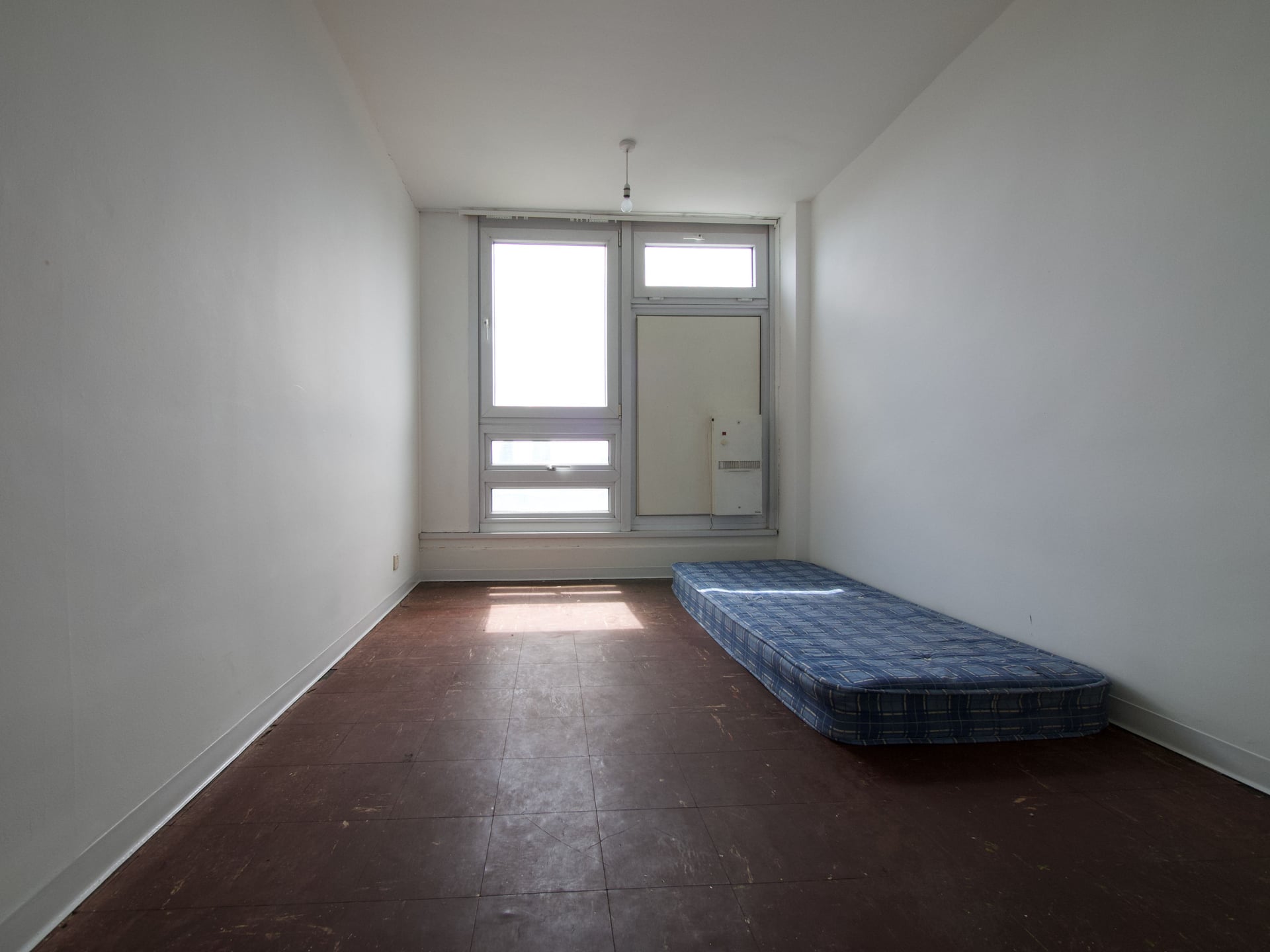
Most of these photographs, of the tower, its lobbies, lifts, walkways and fittings, were made in 2014, whilst the tower was being emptied. Five were made in vacated flats in June 2015, and two elsewhere at the tower that day. The records further down show what happened.
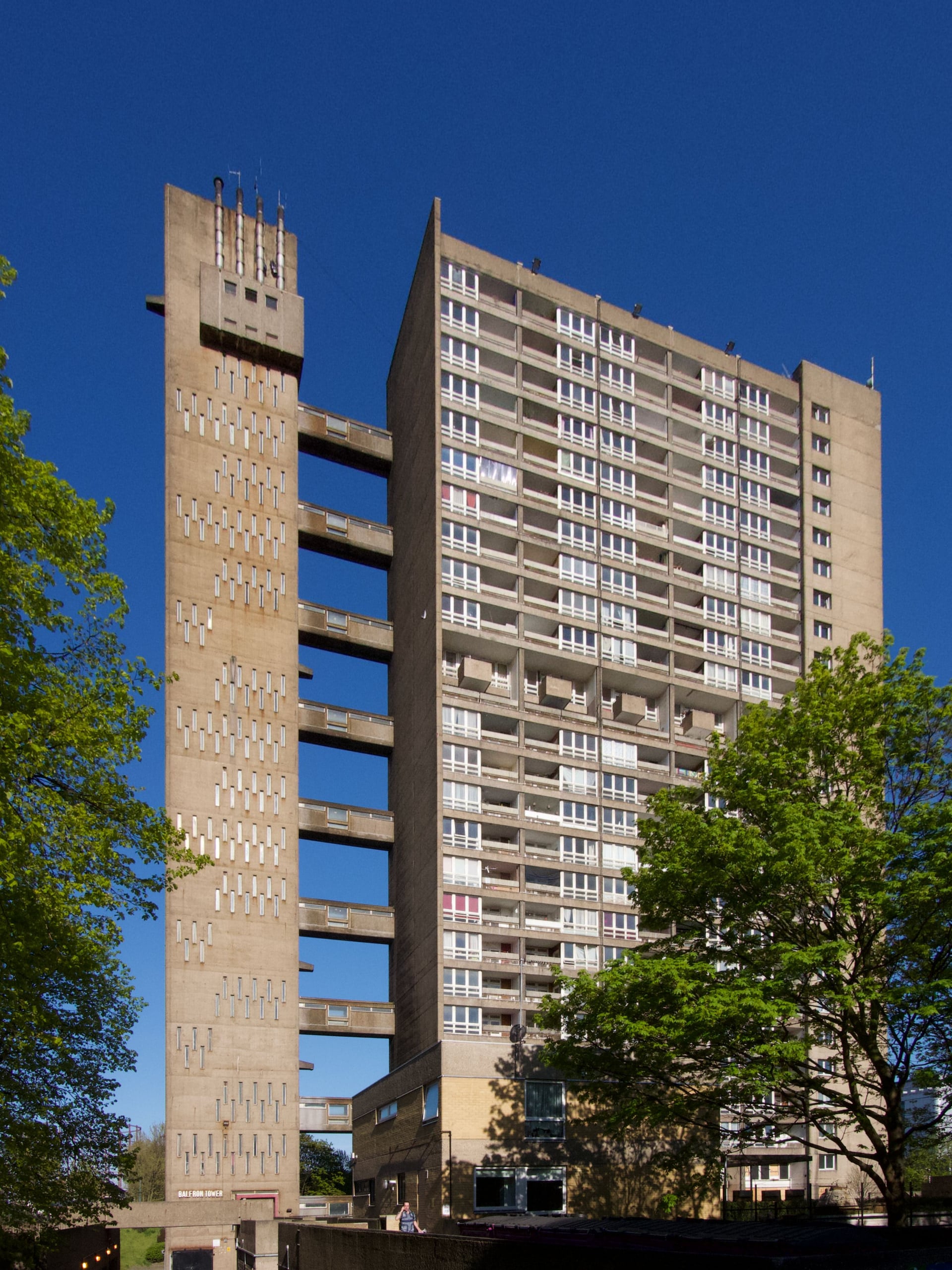
- Architect
- Ernő Goldfinger, for the London County Council
- Built
- 1965–67; first tenants February 1968
- Homes
- 146 (136 flats, 10 maisonettes); 26 storeys
- Listing
- Grade II, 14 March 1996; Grade II*, 15 October 2015
- Status
- Private rented flats, managed by Way of Life since January 2024
- Visits
- April–September 2014; June 2015
The encounter
I first saw Balfron Tower as I drove out of the Blackwall Tunnel, and began photographing inside it in April 2014. An email to my Goldsmiths account invited people to take part in Balfron Season; at the time, I knew little about the wider issues.
In September 2014 I showed black-and-white photographs of the shared spaces in one of the flats, alongside three other photographers.
Balfron Season ran from mid-September to mid-October 2014. Bow Arts organised it, with support from Poplar HARCA, the tower’s landlord. HARCA helped facilitate the photographers’ show.
My photography exhibition was a visceral, aesthetic and largely superficial reaction to a building I actually knew very little about…

The promise, 1963–68
Ernő Goldfinger designed the tower for the London County Council (LCC). At an LCC meeting on 1 February 1963 a planner said the proposed 27-storey block was “possibly out of scale with its surroundings”.
The minute was then amended, over his name, to “certainly out of scale”. The council went ahead.
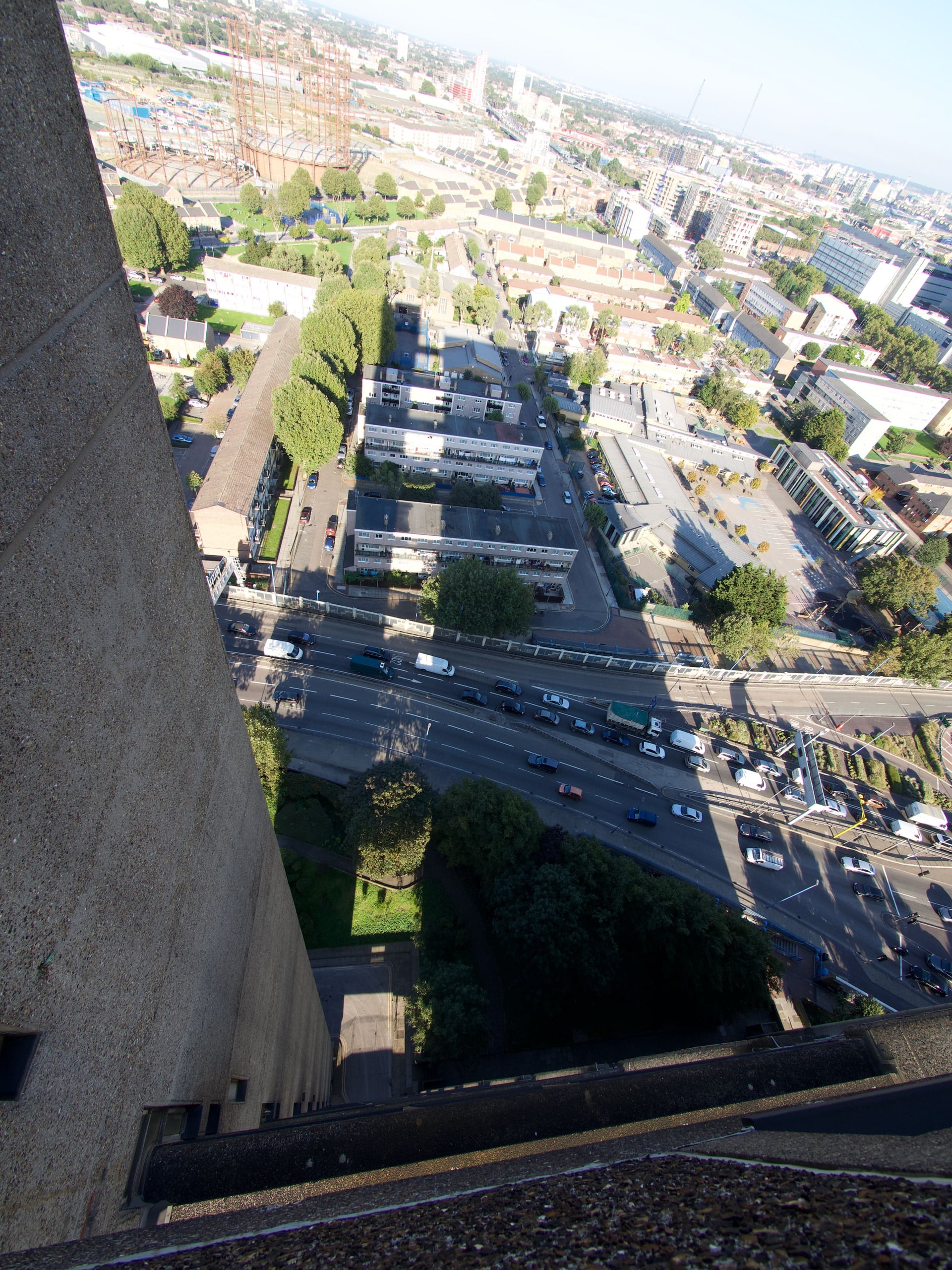
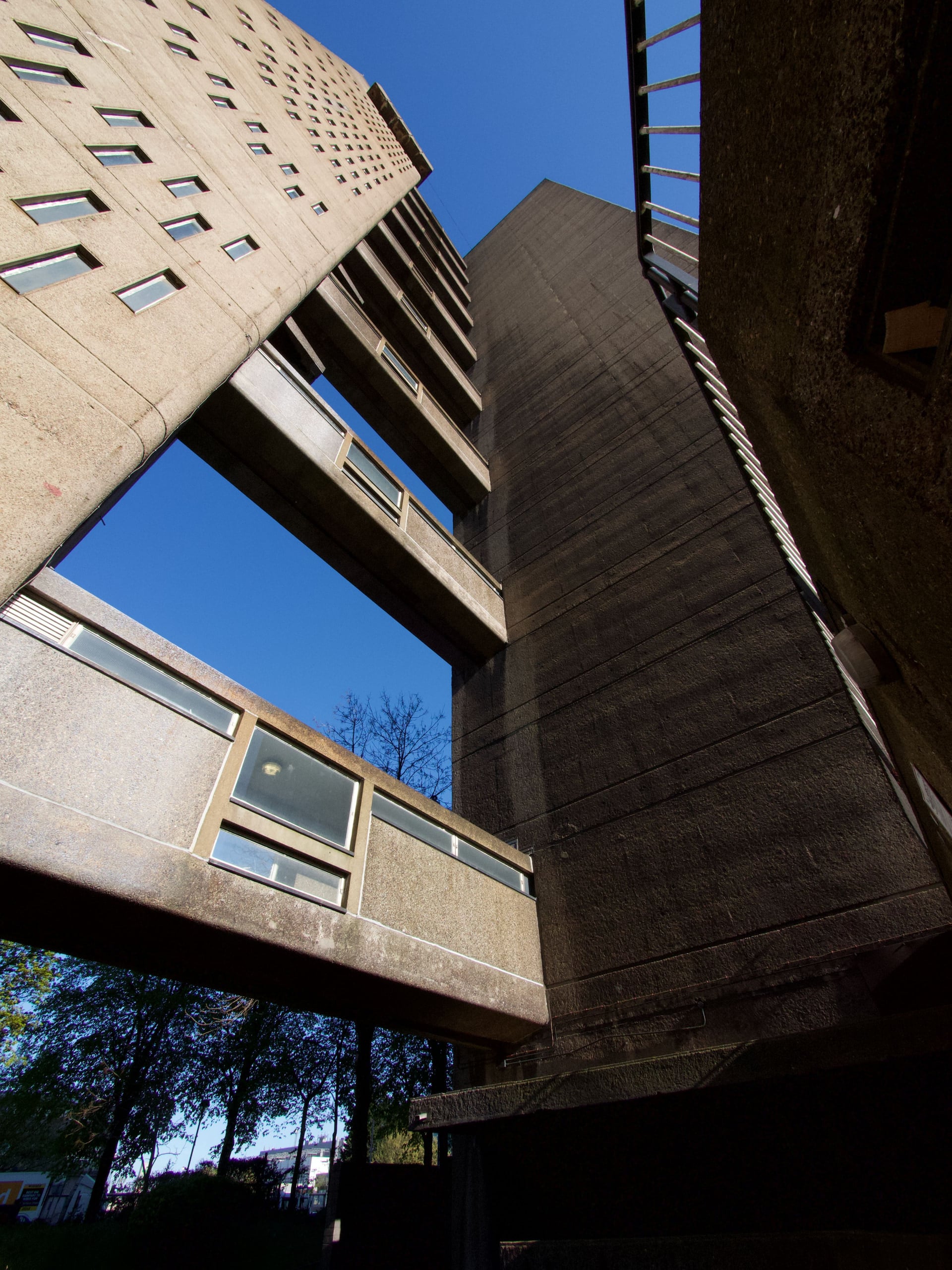
The tower was built in 1965–67 with cast-on-site concrete cross-walls, not the prefabricated panels of system-built blocks. Its list entry says the concrete is “executed to a high standard”. A separate service tower holds the lifts and is linked to the 146 homes by bridges every third floor.
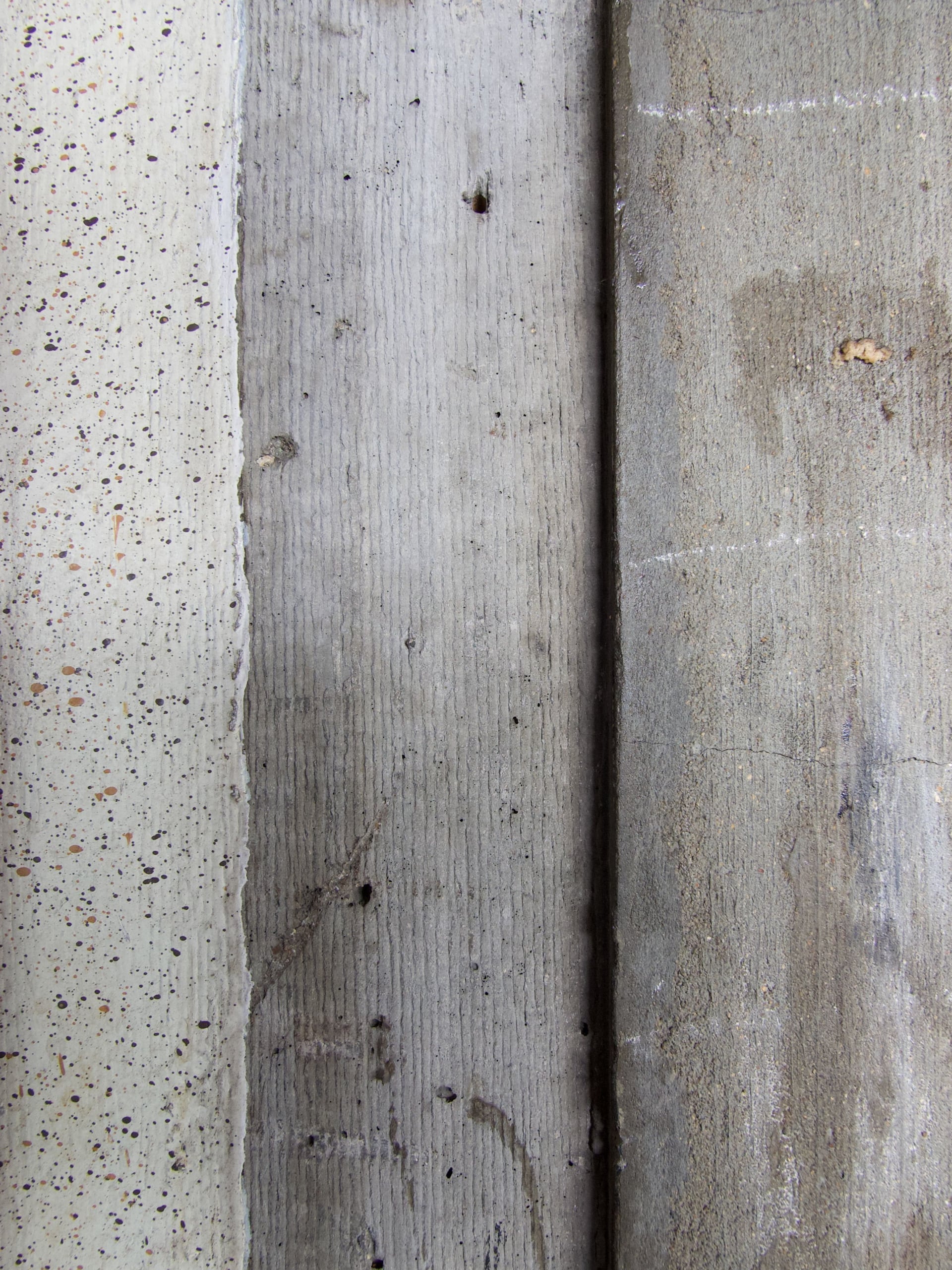
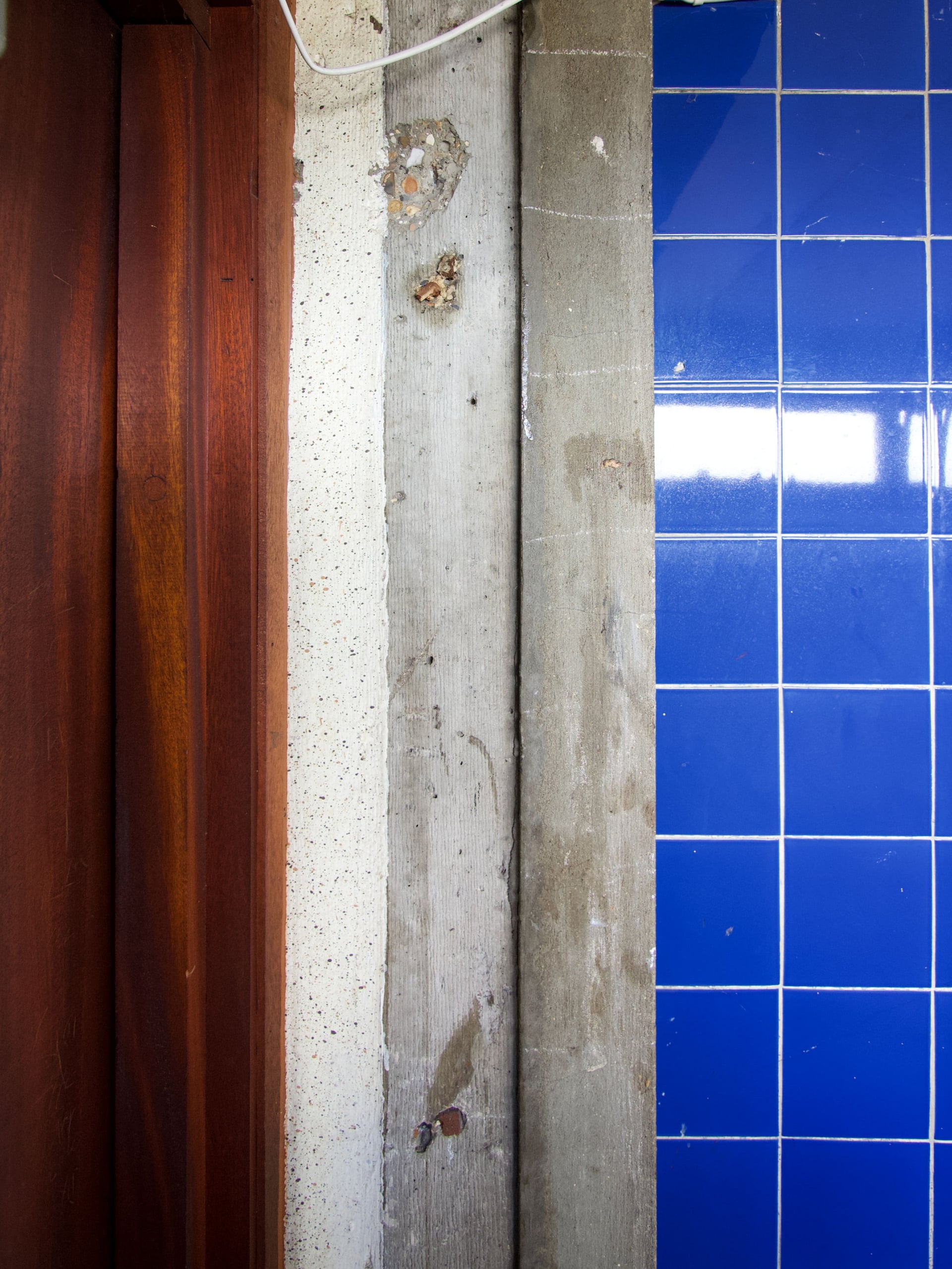
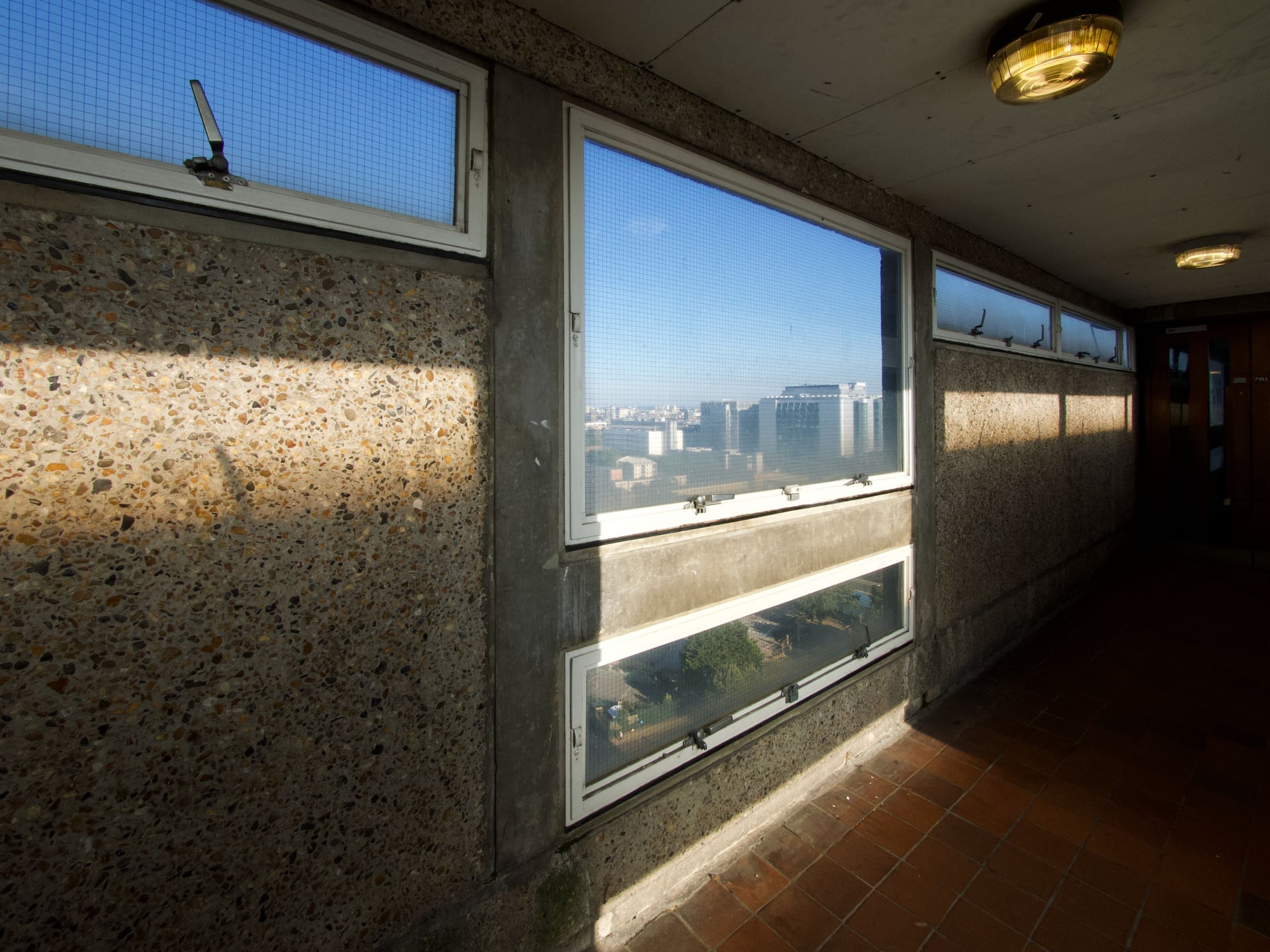
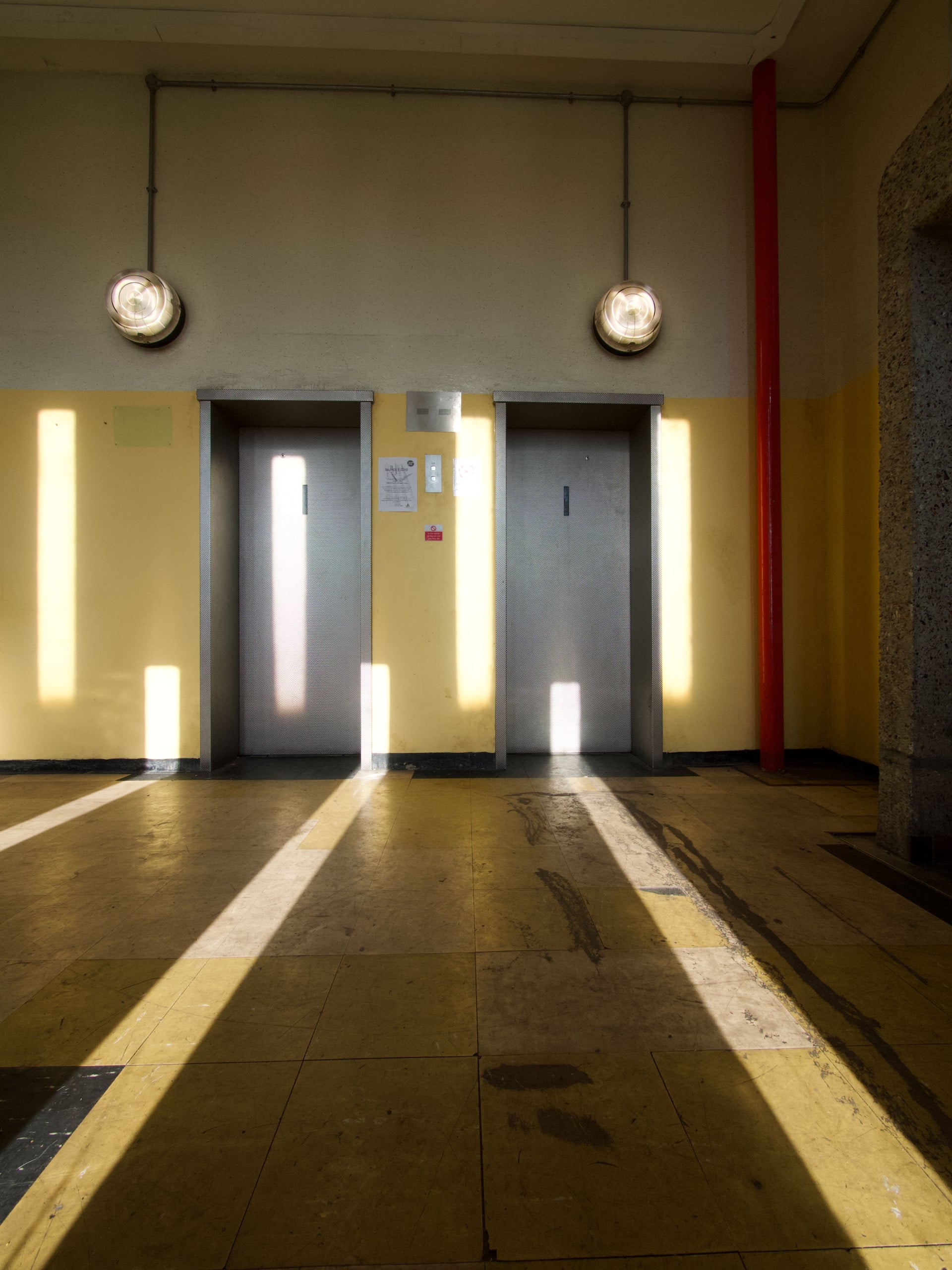
The nine access corridors form so many East End pavements, on which the normal life of the neighbourhood continues.
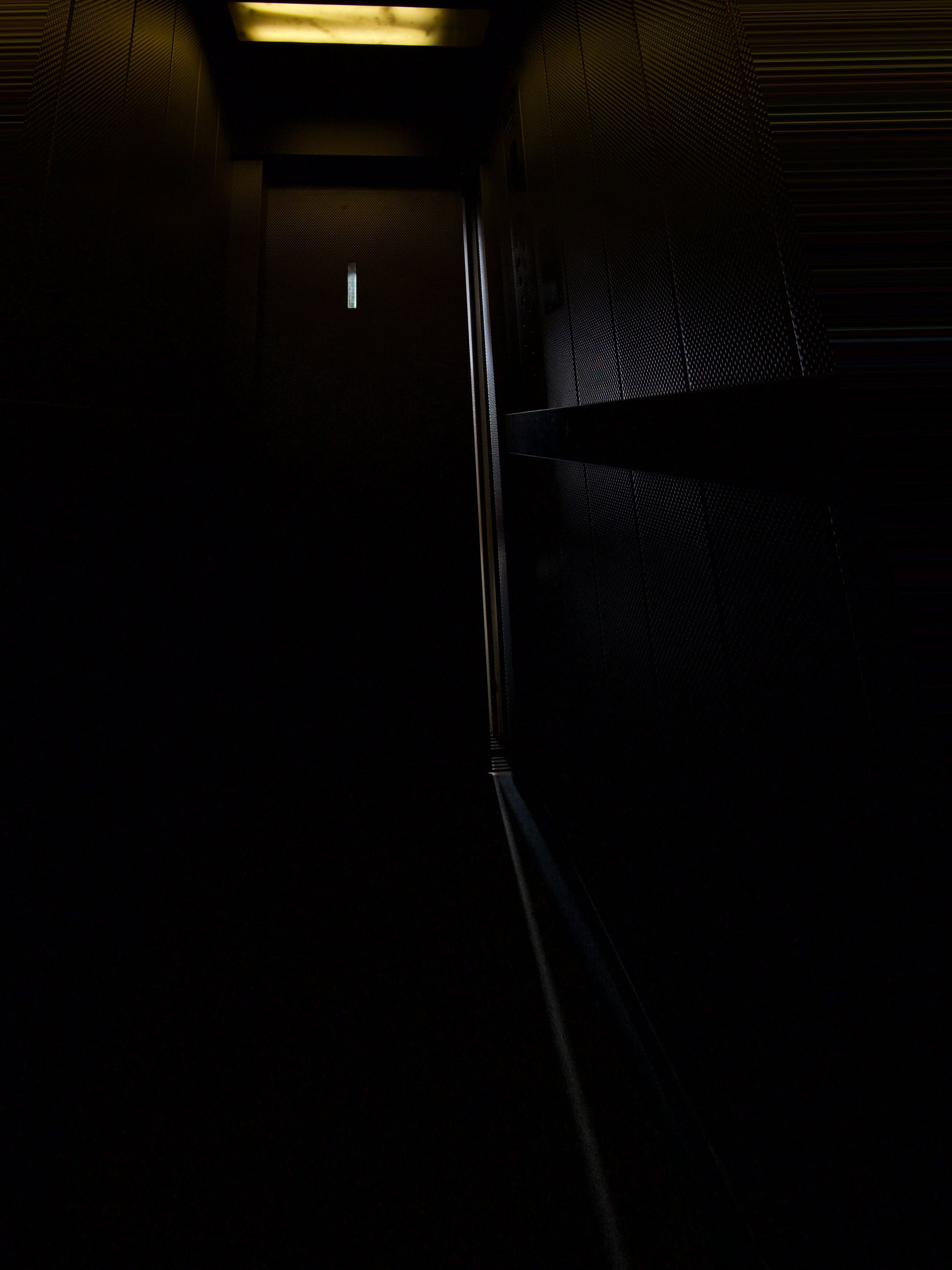
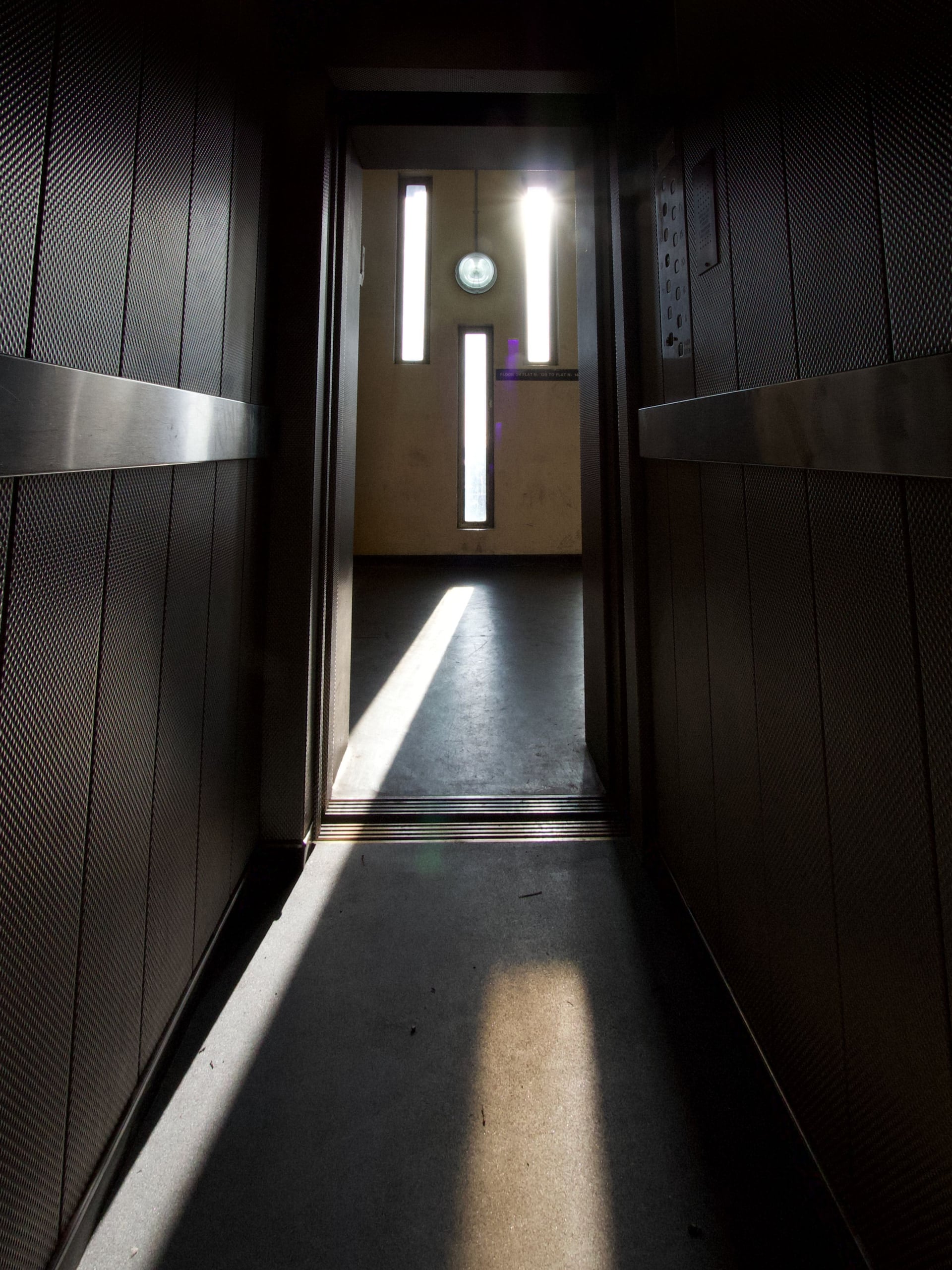
The first tenants moved in from February 1968. Goldfinger reported that the scheme’s first phase, the tower and its neighbouring old people’s flats, housed 160 families, all but two of them from Tower Hamlets.
Goldfinger and his wife Ursula lived in flat 130 for two months. He wrote that “the success of any scheme depends on the human factor”.
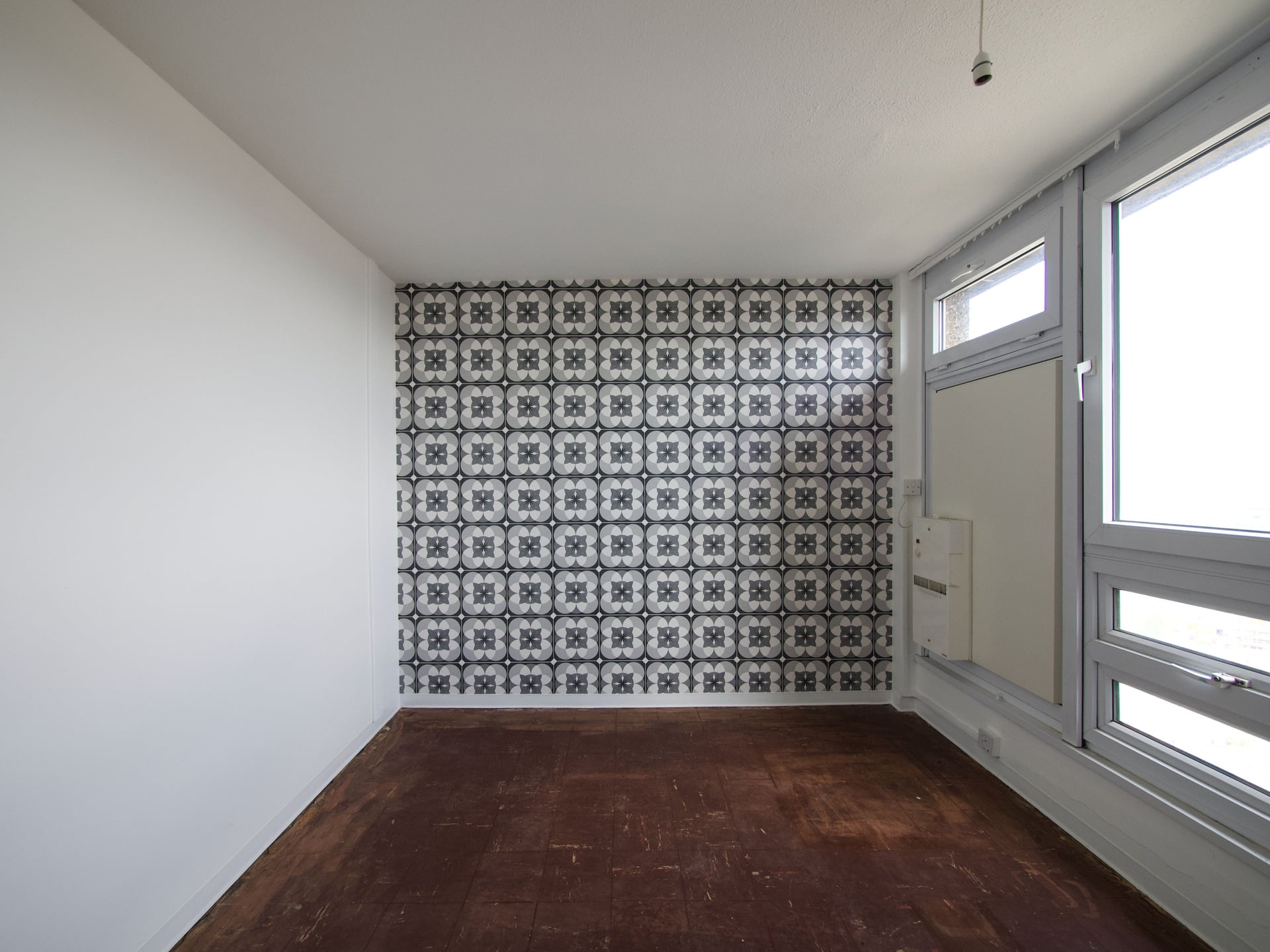
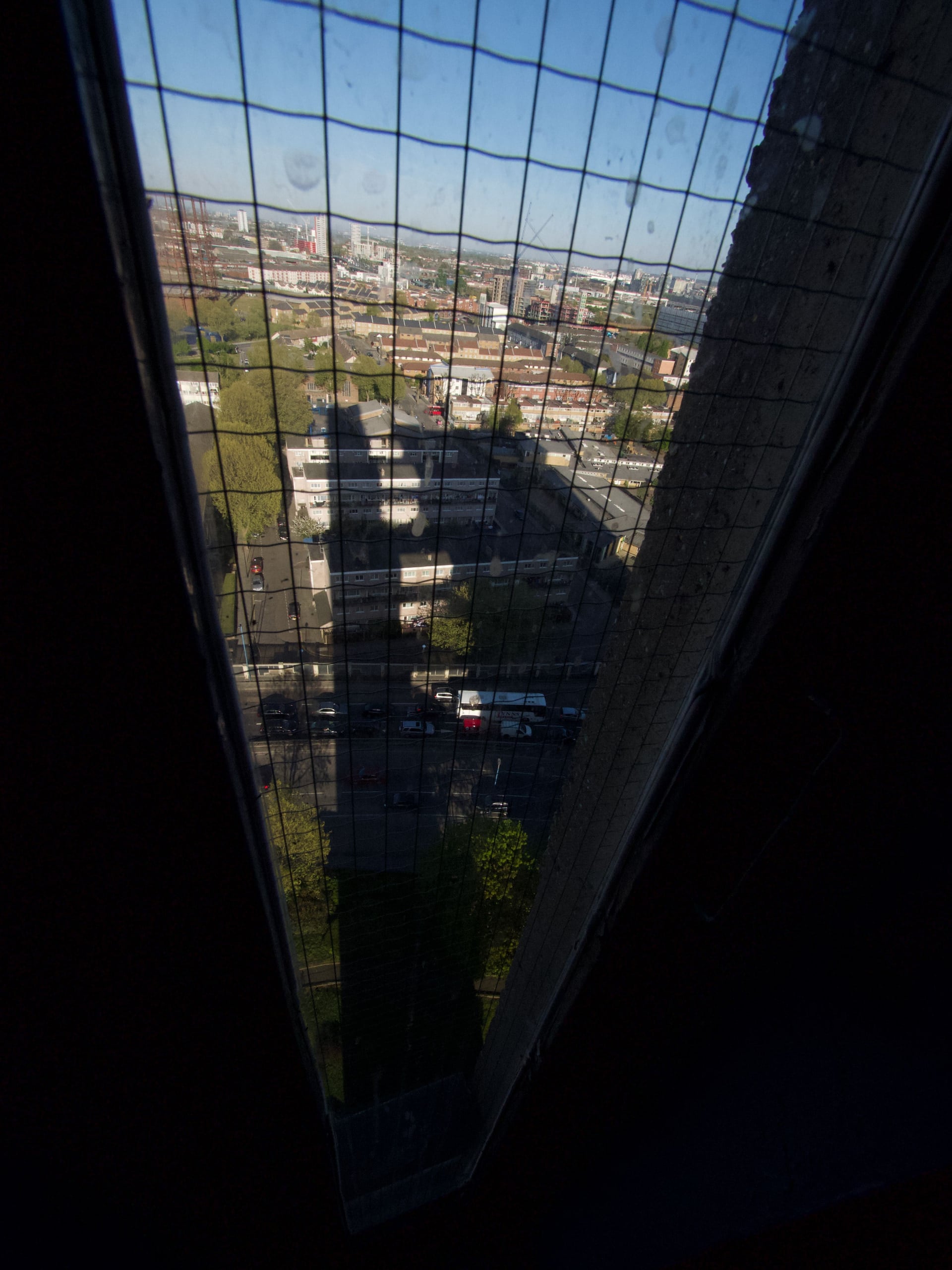
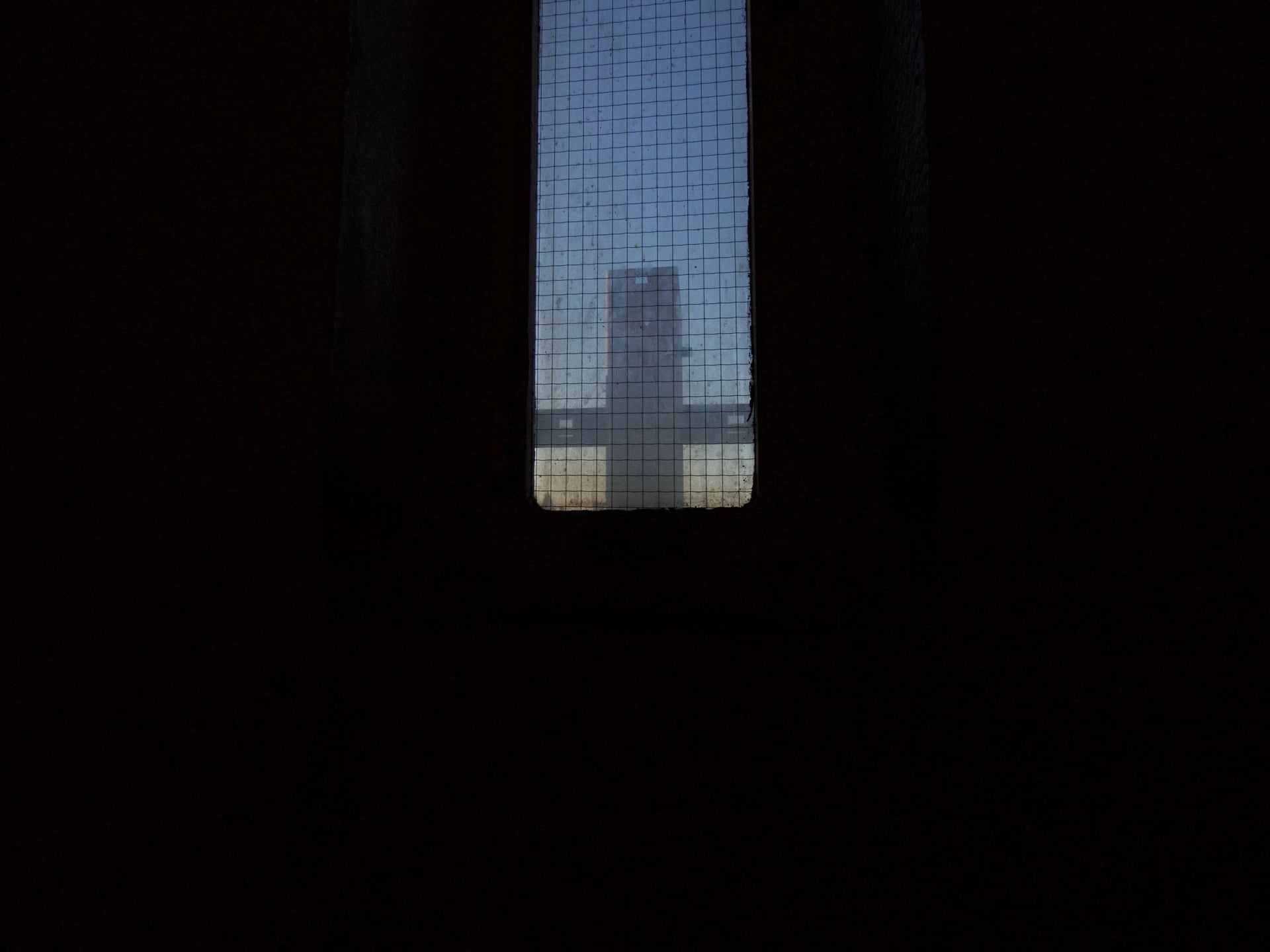
I live on the 25th floor, but you couldn’t drag my wife and me out of the place now even though we lived on the ground floor before.
The same report recorded complaints almost every day of the Goldfingers’ stay. Two lifts were not enough for so large a building, there were no electric doorbells, and air vents let in draughts. Another tenant, Harry Smith, spoke of “very bad workmanship”.
On 16 May 1968 a gas explosion brought down one corner of Ronan Point, a system-built tower in Newham, and four people died. Bow Arts later wrote that the position of high-rise blocks in the public imagination was “essentially over-determined” by the disaster.
The neglect, 1969–2007
On 24 January 1969 the Guardian reported towers “already stained with rust” and added: “Here, too, vandalism is setting in.” In 1978 the East London Advertiser reported the Conservative housing boss George Tremlett naming Balfron as “an example of the worst in high rise design”. The same report found the top-floor corridors “neat and tidy, but eerily empty”.
The tower was listed Grade II in March 1996, which protected the design. The 2006 offer to tenants said the listed status made the cost of the work “significantly higher” than for typical council homes. It promised, if the transfer went ahead, that “all outstanding repairs would be undertaken”.
Hackney Citizen wrote in 2015 that Balfron “had suffered from an historic lack of maintenance”. Photographs made in 2014 cannot show how the tower was kept in earlier decades.
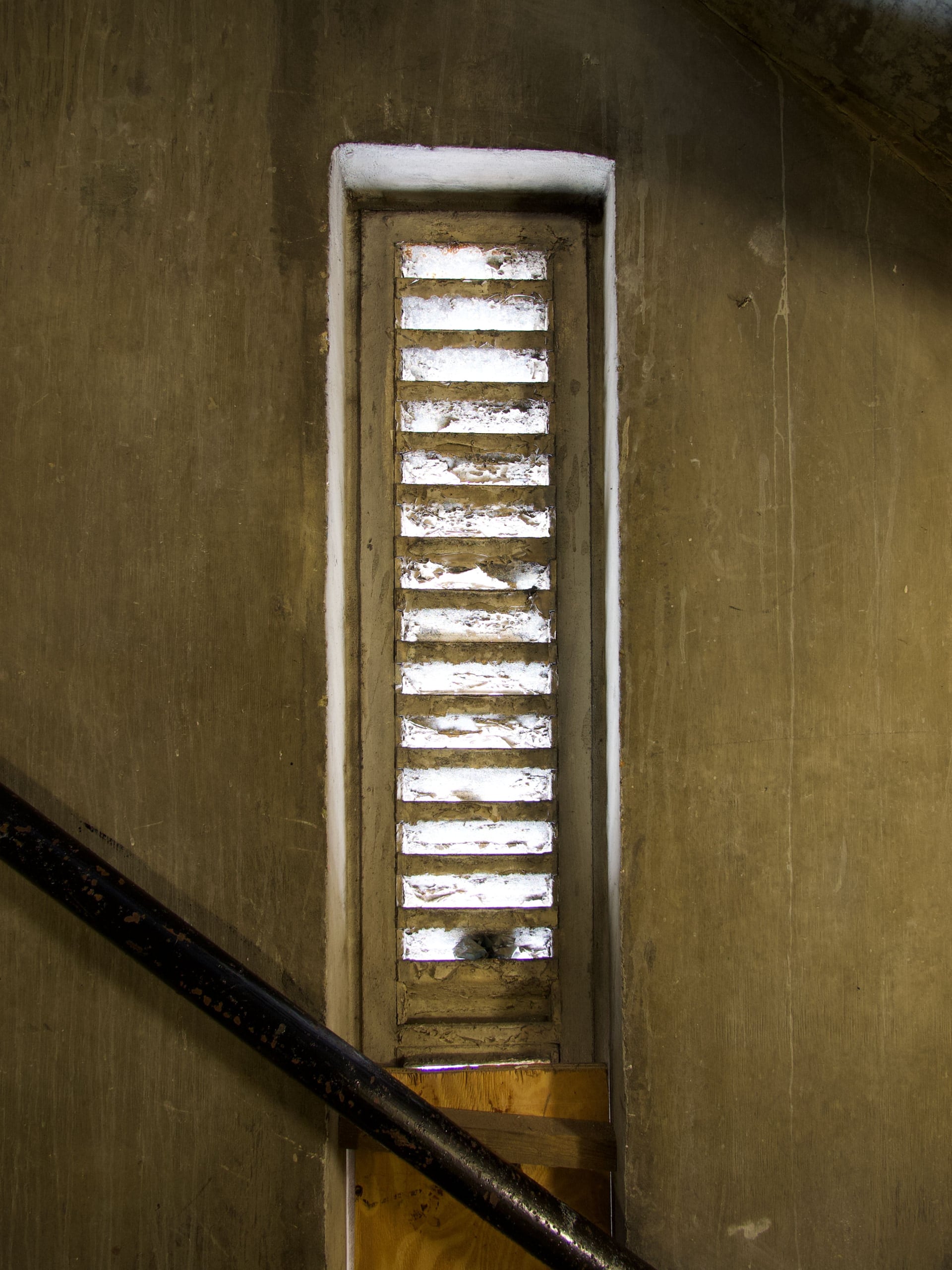
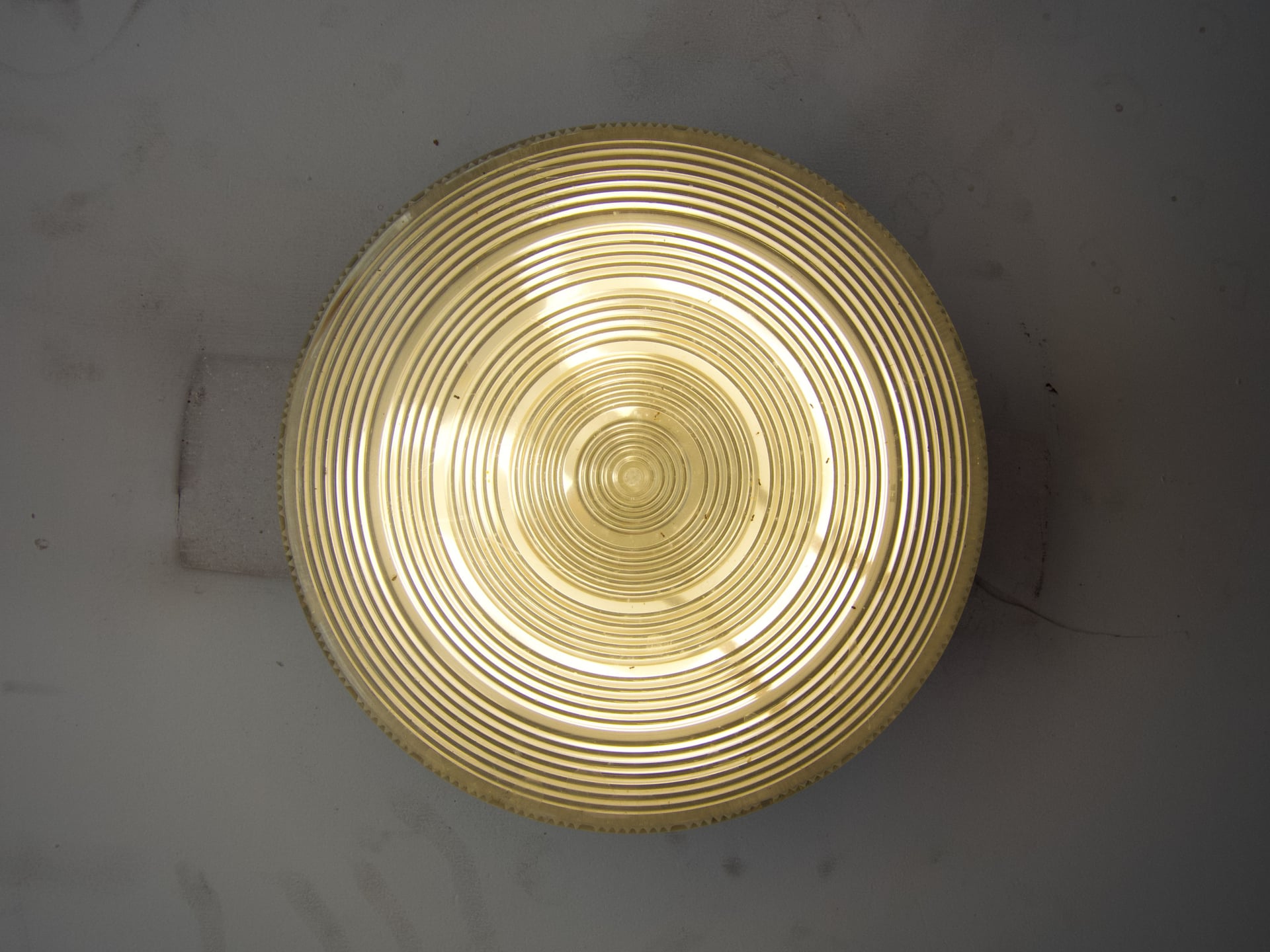
The transfer and the decant, 2007–15
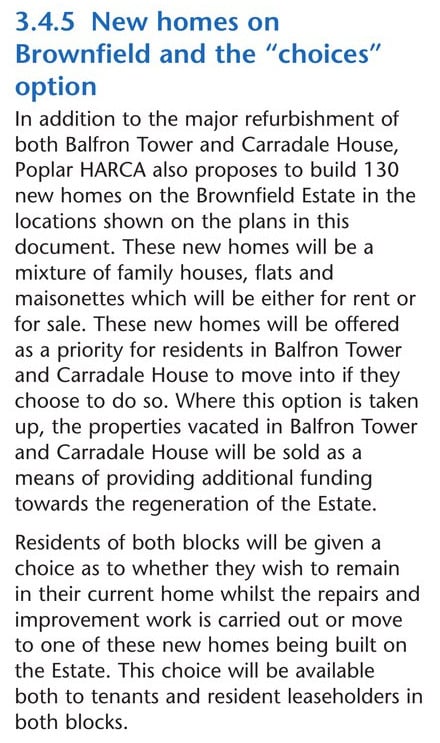
In November 2006 tenants voted to transfer their estates to the housing association Poplar HARCA, and the transfer was completed in December 2007. Balfron’s tenants were offered a choice: stay whilst the tower was refurbished, or move to one of 130 proposed homes elsewhere on the Brownfield Estate. The tower stands on that estate, and the homes needed planning permission.
The flats they left would be sold to help fund the estate’s regeneration. In 2006 HARCA wrote that this “choices” option meant “no resident will lose their home involuntarily”.
HARCA later blamed two things for the loss of its planned cross-subsidy: the 2008 financial crisis, and a planning refusal for a linked set of developments. From 2008 Bow Arts let empty flats to artists.
In the autumn of 2010 HARCA told all residents they would have to leave for the works. Its letter to one tenant that year called a return “possible but not probable”.
[I] see my flat, my home, as a safe haven with memories of my brothers, and an inspirational, poetic view that has helped me through very difficult times … I have lived for the past few weeks with the worry of losing my home.
I can see my old flat from the balcony of my new one, and I am starting a new life.
HARCA said in 2022 that 95% of former residents stayed in Tower Hamlets, and that 81% stayed as HARCA residents within a square mile of Balfron. It said four households went further afield, without saying where. The only former residents HARCA says decided to return to the tower are leaseholders.
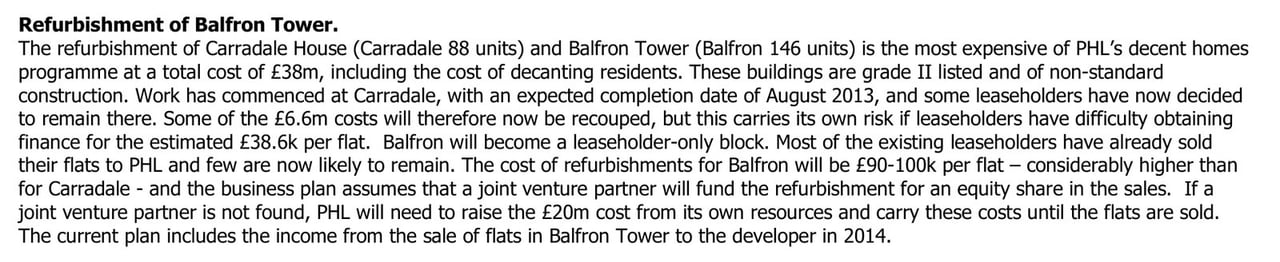
In August 2012 the social housing regulator’s viability report on HARCA, based on HARCA’s business plan, said: “Balfron will become a leaseholder-only block.”
In 2014 HARCA described “converting the Grade 2 listed Balfron Tower from a social rented block to all private sales”. In the same document it valued the tower at minus £4.03m on the basis that it remained social housing (a “red book” valuation on existing use value for social housing).
That is the tower’s value to a landlord keeping it as social rented homes. Rent earned, less the cost of running and repairing it, came out below zero on HARCA’s assumptions. It is a valuation, not a repair bill, and the document does not show the working.

Critics called the artists’ lets and Balfron Season “artwashing”. In October 2014 the Municipal Dreams blog wrote that the resident artists, Balfron Season and National Trust tours were “at minimum, complicit”.
Rab Harling lived in the tower as a Bow Arts artist-tenant from February 2011 and photographed nearly 120 of his neighbours’ homes. He later titled his account “Balfron Tower: the artwash of an icon”.
In December 2014 HARCA formed a joint venture with developers, and in February 2015 it was announced that no social housing would remain. In February 2017 the tower was sold to that joint venture, which HARCA half-owns.
I think Poplar HARCA was handed a poisoned chalice, and handled it badly. On its own valuation the tower was worth minus £4.03m as social housing.
The regulator’s 2012 report on HARCA’s plan put the repair at £90,000 to £100,000 a flat, and £20m for Balfron if no joint-venture partner was found. The refurbishment for private sale had an original budget of £40m and a reported cost of £57m.
Repairing the tower as social housing would have been a different job. I understand why a landlord with homes across Poplar would not spend that on one tower. What I hold against HARCA is the handling.
The regulator recorded a “leaseholder-only” plan in 2012, whilst tenants were told for two more years that a return was possible. I can find no published comparison of the alternatives.
The tower’s loss of social housing is not in dispute; the net change across the estate is. HARCA wrote in 2017 that 110 social homes were lost with Balfron, and that it would deliver 148 affordable homes, 126 for social rent, across the wider Brownfield Estate.
David Roberts, cross-referencing eleven documents from 2006–14, calculated a likely net loss of 42 to 83 social-rent homes on the estate’s footprint. HARCA disputes his figures, and its own count covers the wider Brownfield Estate regeneration.
What happened next, 2019–26
The flats, refurbished by Londonewcastle, Telford Homes and HARCA, went on sale on 27 September 2019, one-bedroom flats from £365,000. The sale was withdrawn in early 2020. 139 homes were relaunched on 23 July 2022 and withdrawn in spring 2023; Novara Media reported that none had sold.
Asked by Novara in 2023 why the flats had not sold, the partnership would not say, and spoke only of “the unpredictable current economic climate”. Novara reported on 4 August 2023, from an unnamed industry source, that agreed sales fell through because buyers were refused mortgages on the tower’s “non-standard” concrete frame. It called this “not a full explanation”.
HARCA said in 2022 that seven leaseholders had decided to return. By December 2023, The Developer reportedly recorded, a small number had moved back. On 9 January 2024 Way of Life was appointed to manage 140 flats for private rent.
Three kinds of ending meet here. Selling the tower was intended: HARCA’s business plan assumed it from 2012.
The repair backlog was acknowledged: in 2006 the offer to tenants promised that “all outstanding repairs would be undertaken”. That none of the flats sold, as Novara reported, was not what the 2012 plan assumed.
What I got right in 2015, and what I got wrong
In 2015 I made a fictional sales brochure that left out Balfron’s social housing history and the rehousing of its tenants by March 2015. The 2019 brochure also omits “social housing” and promises “a place of strong community”; I was right about the omission.
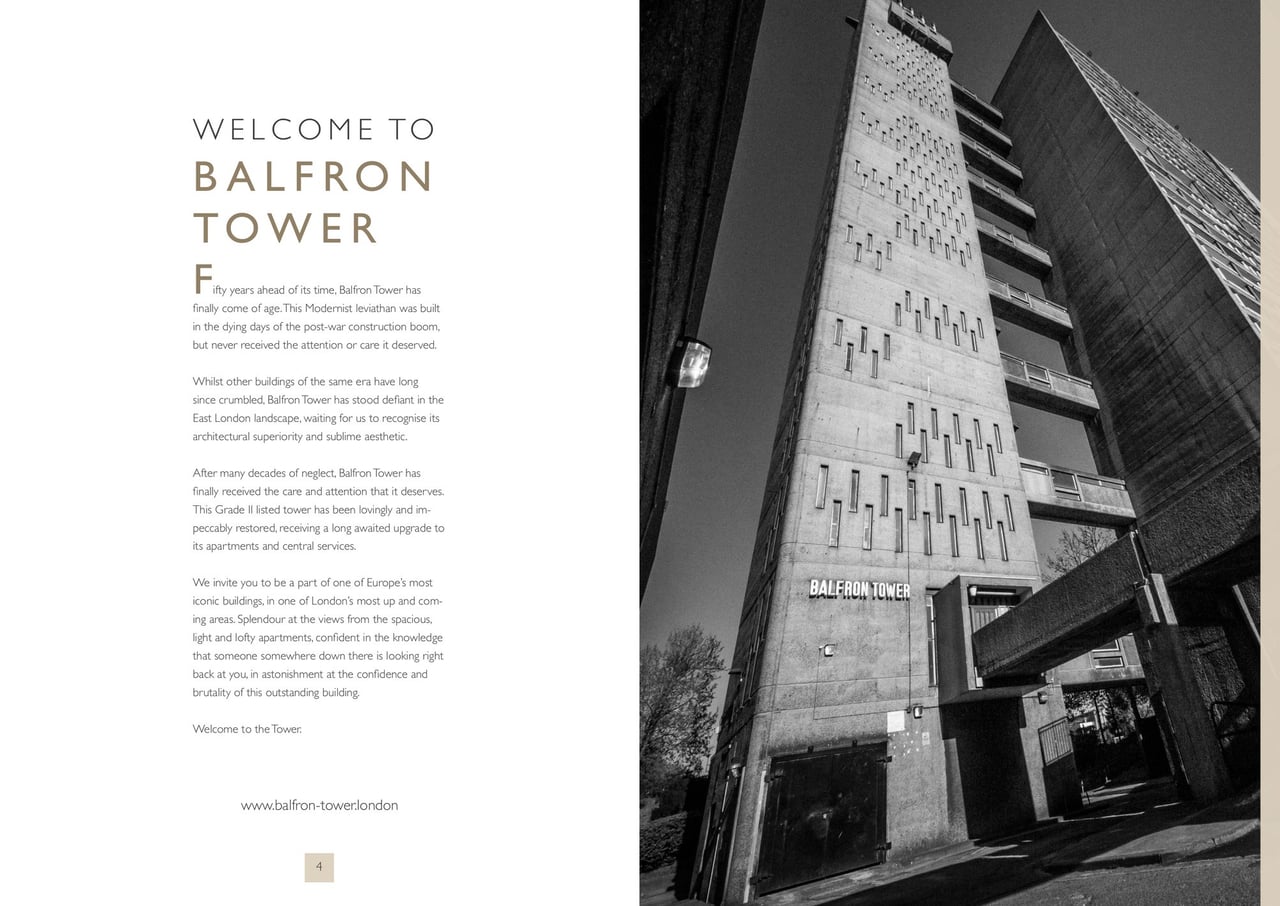
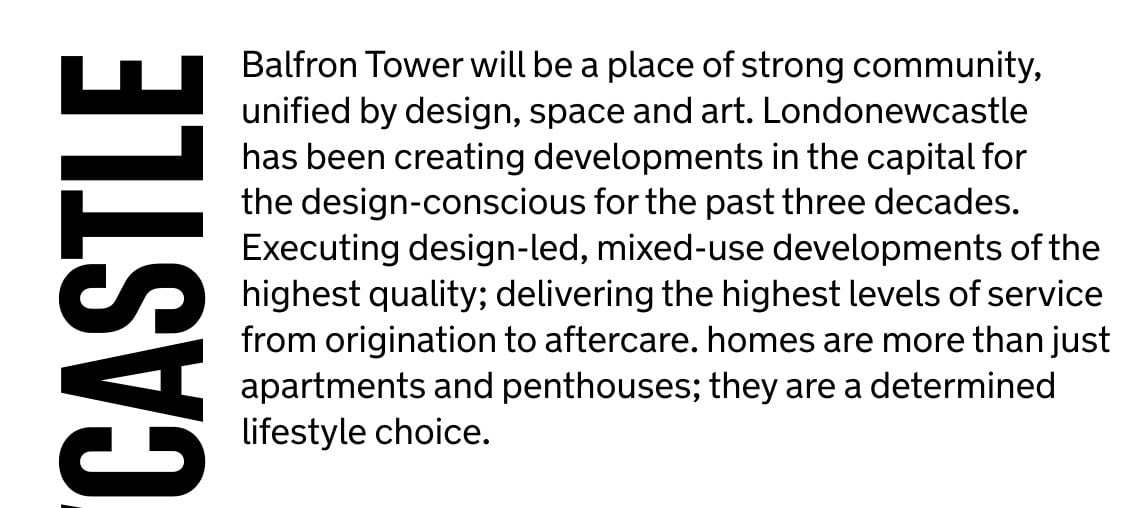
I was wrong about the ending. In 2015 I expected a “capitalist monument” of luxury flats; Novara later reported that none had sold, and the flats are rented through a corporate operator.
I was wrong about HARCA too. In 2015 I read it as an agent of capital; the regulator’s 2012 report and HARCA’s own negative valuation changed my mind.
And the photographs misled me. The emptied flats I photographed in June 2015 read as eviction. The record shows a choice offered in 2006 and assurances that shifted; the photographs cannot show why anyone left.
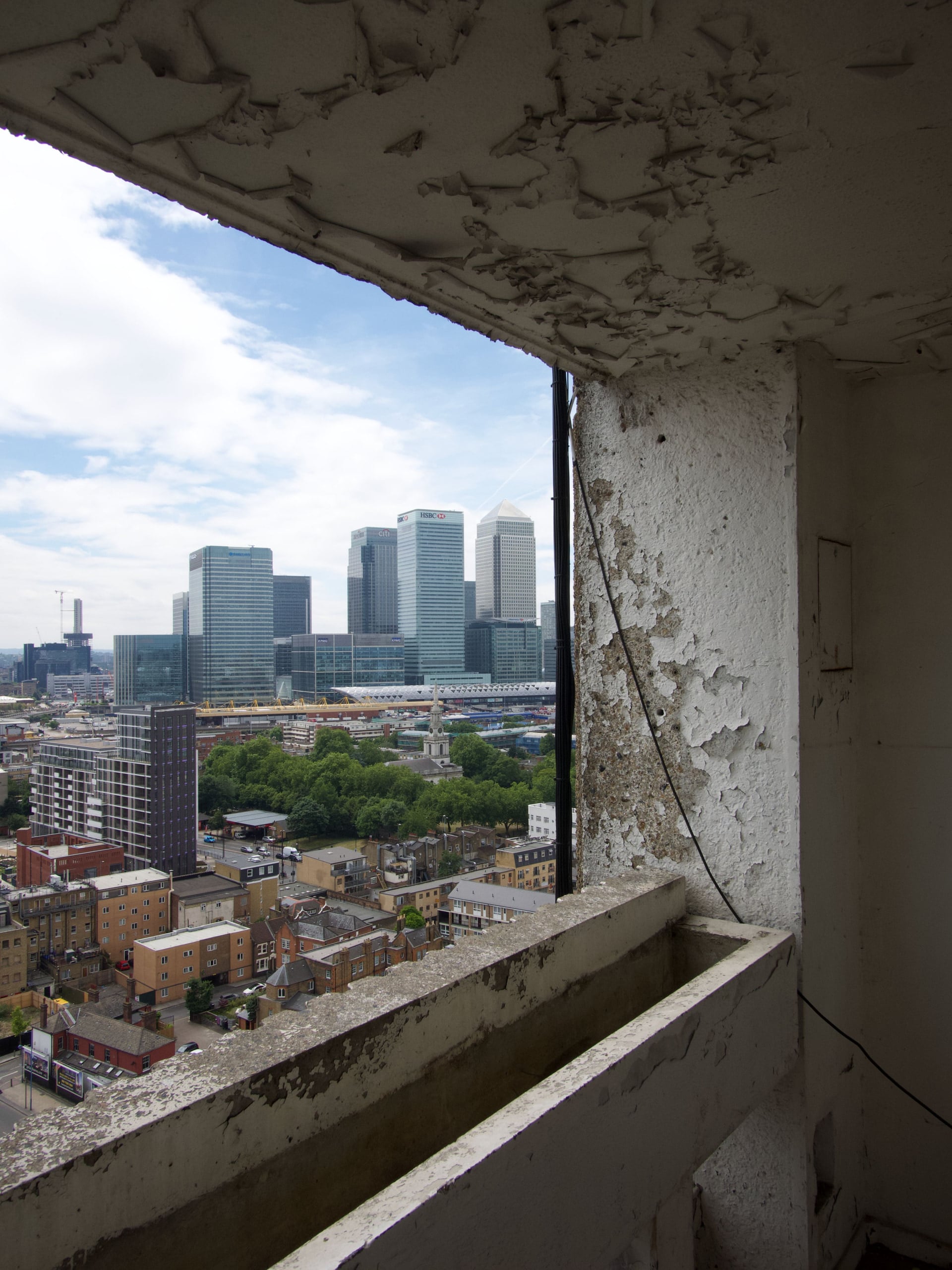
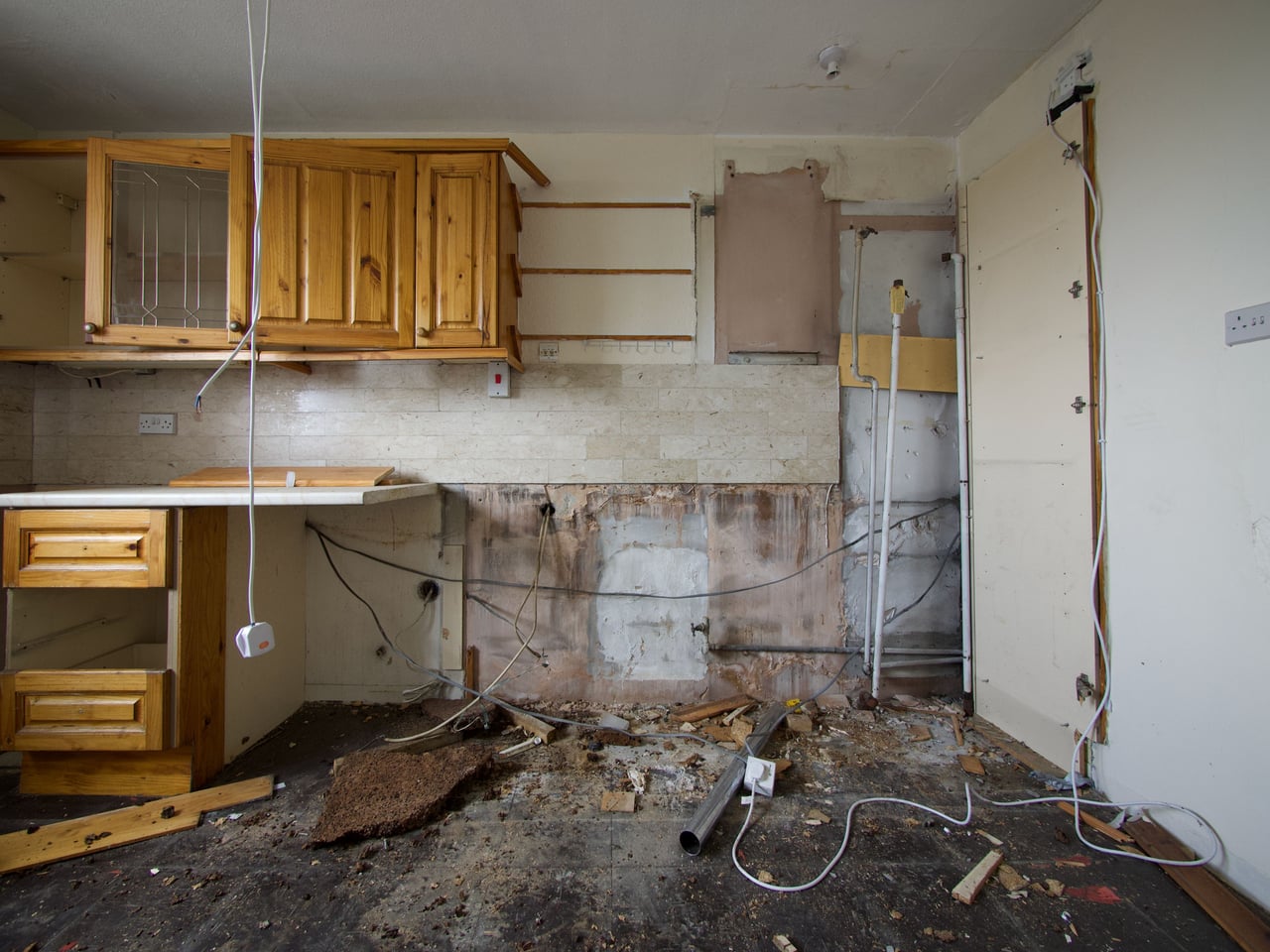
Built by the state, neglected by the state and at one time representative of its failure, it has been forced to capitulate to private capital, in order to safeguard its future physical integrity, but to the detriment of its socialist foundations.
My own part needs saying. I showed my work in the tower with HARCA’s help, and in 2015 I asked whether I had been “complicit in the process of aiding the transition of the building from public asset to private real-estate”.
Owen Hatherley wrote in 2019 that critics and enthusiasts like him “probably helped it along, by turning brutalism into a coffee-table fetish object”. I was one of them.
Evidencewhat remains unknown
Chronology
- 1963, 1 February: LCC planner calls the block “certainly out of scale”; the scheme goes ahead.
- 1965–67: Built for the LCC, then the GLC.
- 1968, February: first tenants move in; the Goldfingers live in flat 130 for two months. 16 May: Ronan Point partly collapses.
- 1969, 24 January: the Guardian reports rust and vandalism.
- 1978, 21 July: East London Advertiser reports George Tremlett calling Balfron “an example of the worst in high rise design”.
- 1996, 14 March: listed Grade II.
- 2006, August: offer document. November: tenants vote for transfer.
- 2007, December: transfer to Poplar HARCA completed.
- 2008: Bow Arts live/work lets begin.
- 2010, autumn: all residents told they must leave. Return “possible but not probable”.
- 2012, August: the regulator’s viability report on HARCA (“leaseholder-only block”).
- 2014: value-for-money self-assessment, negative valuation of £4.03m. 10–21 September: Balfron Season photography show. 25 September: development LLP incorporated. December: joint venture formed.
- 2015, February: no social housing announced. March: Hackney Citizen reports all tenants re-housed. 15 October: Grade II*. 16 December: planning permission and listed building consent granted.
- 2017, February: tower sold to the joint venture.
- 2019, 27 September: flats launched for sale.
- 2020, early: sale withdrawn.
- 2022, 23 July: 139 homes relaunched.
- 2023, spring: all withdrawn; Novara later reported none sold. October: Telford Homes reports a £193m loss for 2022, partly on “the refurbishment of a listed residential tower”, understood to be Balfron. December: a small number of returning leaseholders have moved back.
- 2024, 9 January: Way of Life appointed to manage 140 rented flats.
What remains unknown
- Why, as Novara reported, none of the flats sold. The partnership would not say when Novara asked in 2023; the mortgage account rests on one unnamed source.
- Whether HARCA ever compared keeping the tower as social housing with selling it. I have not found a published options appraisal for Balfron; HARCA’s 2013/14 statement refers to “extensive stock option appraisals” only in general.
- The net change in social-rent homes on the estate. HARCA counts across the wider Brownfield Estate regeneration; Roberts counted the estate’s footprint.
- How many households HARCA’s figures on former residents (95% in Tower Hamlets, 81% still HARCA residents) cover. I have not found the number of households those percentages cover.
- Whether HARCA met the 2007 transfer agreement’s duty to use “all reasonable endeavours” to build 130 dwellings, or an equal number of habitable rooms, for Balfron and Carradale residents.
- When the last social tenant left the tower. By March 2015 all tenants had been rehoused; HARCA says 95% of former residents stayed in Tower Hamlets.
- Why HARCA counted 140 rented flats in 2024, when 146 were refurbished, 139 marketed and seven leaseholders returned. The Evening Standard put returning leaseholders at six in 2019, and 146 minus six is 140; no source links the figures.
BibliographyEvery source this page quotes or shows
- Balfron Social Club, “As buyers reject a regenerated Balfron Tower, we reveal what’s next as all flats are withdrawn from sale”, blog post, 3 April 2023. https://balfronsocialclub.org/2023/04/03/as-buyers-reject-a-regenerated-balfron-tower-we-reveal-whats-next-as-all-flats-are-withdrawn-from-sale/
- Terence Bendixson, “Box Mania”, The Guardian, 24 January 1969, transcribed in Balfron Tower: a building archive (David Roberts, 2015), document 6. https://www.balfrontower.org/document/6/press-cuttings-1969/
- Bow Arts, Balfron Season programme, 2014, in Balfron Tower: a building archive (David Roberts, 2015), document 79. https://www.balfrontower.org/document/79/balfron-season/
- Bow Arts, The Balfron Season, 2014. https://bowarts.org/wp-content/uploads/2025/01/Balfron-Season-1.pdf
- Helen Christie, “Newly Refurbished Apartments Launched In Iconic Brutalist Landmark”, What House?, 26 July 2022. https://www.whathouse.com/news/balfron-tower-telford-homes-poplar-launch-jul-22/
- Nick Colley and Jane Fear, Is there an investment case for social and affordable housing in the UK?, Impact Investing Institute, October 2021. https://www.impactinvest.org.uk/resources/publications/is-there-an-investment-case-for-social-and-affordable-housing-in-the-uk/
- Companies House, Balfron Tower Developments LLP (OC395545). https://find-and-update.company-information.service.gov.uk/company/OC395545
- The Developer, “Balfron Tower, London Borough of Tower Hamlets, for Poplar HARCA and Telford Homes with Studio Egret West and Ab Rogers Design”, place database, 2024; search-result extract only, full entry not consulted. https://thedeveloper.live/place-database/place-database/balfron-tower-london-borough-of-tower-hamlets-for-poplar-harca-and-telford-homes-with-studio-egret-west-and-ab-rogers-design
- English Heritage, list entry summary, Balfron Tower, St Leonards Road, Grade II, 14 March 1996, in Balfron Tower: a building archive (David Roberts, 2015), document 16. https://www.balfrontower.org/document/16/list-entry-summary-balfron-tower-st-leonards-road/
- Marcus Field, “Balfron Tower flats: first look at the new revamp of Ernő Goldfinger’s iconic Brutalist tower in Poplar”, Evening Standard, Homes and Property, 26 September 2019. https://www.standard.co.uk/homesandproperty/buying-mortgages/balfron-tower-flats-first-look-at-the-new-revamp-of-erno-goldfingers-iconic-brutalist-tower-in-poplar-a133681.html
- Joey Gardiner, “Safety costs and problem job send Telford Homes tumbling £193m into red”, Building, 19 October 2023. https://www.building.co.uk/news/safety-costs-and-problem-job-send-telford-homes-tumbling-193m-into-red/5125860.article
- Ernő Goldfinger, press report on Rowlett Street, phase I, RIBA Goldfinger archive, 13 May 1968, in Balfron Tower: a building archive (David Roberts, 2015), document 5. https://www.balfrontower.org/document/5/riba-archive-records/
- Hackney Citizen, “Balfron Tower: Unseen documents shed light on controversial sale”, 6 May 2015. https://hackneycitizen.co.uk/2015/05/06/balfron-tower-documents/
- Rab Harling, “Balfron Tower: the artwash of an icon”, The Urban Transcripts Journal, vol. 1 no. 3, Autumn 2017. https://journal.urbantranscripts.org/article/balfron-tower-artwash-icon-rab-harling/
- Owen Hatherley, “We couldn’t stop Balfron Tower from being privatised. In fact we probably helped it along”, Dezeen, 3 May 2019. https://www.dezeen.com/2019/05/03/balfron-tower-brutalist-renovation-gentrification-owen-hatherley-opinion/
- Historic England, list entry 1334931, Balfron Tower, Grade II*, 15 October 2015. https://historicengland.org.uk/listing/the-list/list-entry/1334931
- House of Commons, “Ronan Point Flats (Report)”, HC Deb 6 November 1968. https://api.parliament.uk/historic-hansard/commons/1968/nov/06/ronan-point-flats-report
- Ella Jessel, “‘It’s a Scandal’: How Property Developers Failed to Sell a Single Flat in Balfron Tower”, Novara Media, 4 August 2023. https://novaramedia.com/2023/08/04/its-a-scandal-how-property-developers-failed-to-sell-a-single-flat-in-balfron-tower/
- London Borough of Tower Hamlets, Cabinet report on the transfer of the Teviot, Brownfield and Aberfeldy estates to Poplar HARCA, 6 June 2007, also in Balfron Tower: a building archive, document 34. https://democracy.towerhamlets.gov.uk/documents/s5484/Tfr%20Teviot%20Brownfield%20Aberfeldy%20to%20Poplar%20HARCA%20Final.pdf
- London Borough of Tower Hamlets, Development Committee, items on PA/15/02554 (planning permission) and PA/15/02555 (listed building consent), 16 December 2015, and decision notices, 23 December 2015. https://democracy.towerhamlets.gov.uk/mgAi.aspx?ID=63563
- London Borough of Tower Hamlets, East India Estates Offer, August 2006, pp. 23–26, in Balfron Tower: a building archive (David Roberts, 2015), document 28. https://www.balfrontower.org/document/28/east-india-estates-offer/
- London Borough of Tower Hamlets and Poplar HARCA, transfer agreement, 2007, schedule 5, para. 2.26.5, in Balfron Tower: a building archive (David Roberts, 2015), document 37. https://www.balfrontower.org/document/37/transfer-agreements-between-tower-hamlets-and-poplar-harca/
- London County Council, Architect’s report, 26 June 1963, transcribed in Balfron Tower: a building archive (David Roberts, 2015), document 1. https://www.balfrontower.org/document/1/archival-records/
- London County Council, Housing Division, notes of meeting, 1 February 1963, transcribed in Balfron Tower: a building archive (David Roberts, 2015), document 1. https://www.balfrontower.org/document/1/archival-records/
- Londonewcastle, Poplar HARCA and Telford Homes, Balfron Tower: A New Generation, sales brochure, 2019.
- Aaron Morby, “Telford Homes plunges to £193m loss”, Construction Enquirer, 19 October 2023. https://www.constructionenquirer.com/2023/10/19/telford-homes-plunges-to-193m-loss/
- Benjamin Mortimer, “How the Balfron Tower tenants were ‘decanted’ and lost their homes”, Hackney Citizen (East End Review), 24 March 2015. https://hackneycitizen.co.uk/2015/03/24/balfron-tower-poplar-harca/
- Municipal Dreams, “Social Housing as Heritage: Thoughts on the National Trust and Balfron Tower”, 27 October 2014. https://municipaldreams.wordpress.com/3235-2/
- Norwich City Council, Social Housing Asset Value, April 2018. https://www.norwich.gov.uk/download/downloads/id/2194/social_housing_asset_valuation.pdf
- Poplar HARCA, Balfron Tower Redevelopment Video and accompanying text, 2006, in Balfron Tower: a building archive (David Roberts, 2015), document 27. https://www.balfrontower.org/document/27/balfron-tower-redevelopment-video/
- Poplar HARCA, “Balfron Tower”, project page, accessed October 2026. https://www.poplarharca.co.uk/new-homes-regeneration/development-projects/project/balfron-tower/
- Poplar HARCA, “Homes at Balfron Tower go on sale”, 28 July 2022. https://www.poplarharca.co.uk/about-us/news/article/homes-at-balfron-tower-go-on-sale/
- Poplar HARCA, letter to a Balfron Tower resident, 2010, in Balfron Tower: a building archive (David Roberts, 2015), document 57. https://www.balfrontower.org/document/57/letter-to-resident/
- Poplar HARCA, Value for Money Self Assessment 2013/14, 2014, p. 3, in Balfron Tower: a building archive (David Roberts, 2015), document 84. https://www.balfrontower.org/document/84/value-for-money-self-assessment-2013-14/
- Poplar HARCA, Value for Money Self-assessment 2016/17, October 2017. https://www.poplarharca.co.uk/wp-content/uploads/2020/06/Value-for-Money-Assessment-2017.pdf
- Poplar HARCA, “Way of Life appointed to manage Balfron Tower”, 9 January 2024. https://www.poplarharca.co.uk/about-us/news/article/way-of-life-appointed-to-manage-balfron-tower/
- Sue Roalman, East London Advertiser, 21 July 1978, transcribed in Balfron Tower: a building archive (David Roberts, 2015), document 8. https://www.balfrontower.org/document/8/press-cuttings-1978/
- David Roberts, Balfron Tower: a building archive, 2015. https://www.balfrontower.org/
- David Roberts, draft objection to the Balfron Tower refurbishment planning application, October 2015, in Balfron Tower: a building archive, document 118. https://www.balfrontower.org/document/118/objections-to-balfron-tower-refurbishment-planning-application/
- Social housing regulator, Viability Report: Poplar HARCA Limited, August 2012, p. 6, in Balfron Tower: a building archive (David Roberts, 2015), document 71. https://www.balfrontower.org/document/71/viability-report/
- James Wakefield, Balfron Tower, MA dissertation, Goldsmiths, University of London, September 2015, pp. 4 and 43.
- James Wakefield, Framing Urban Narratives, exhibition text, October 2015.
- James Wakefield, Modern Estates, sales brochure (fiction), final visual project, MA Photography and Urban Cultures, Goldsmiths, 2015, pp. 4–5.
- James Wakefield, photographs, April–September 2014 and June 2015.
- Fran Williams, “Brutal refurbishment: Studio Egret West upgrades Balfron Tower”, Architects’ Journal, 28 October 2019. https://www.architectsjournal.co.uk/buildings/brutal-refurbishment-studio-egret-west-upgrades-balfron-tower
- David Winder, “Architect sounds out his tenants”, The Christian Science Monitor, 17 June 1968, transcribed in Balfron Tower: a building archive (David Roberts, 2015), document 3. https://www.balfrontower.org/document/3/press-cuttings-1968/