About
I photograph what became of places built for a better life.
The photographs show what was found; records show what happened.
The work
The site shows two bodies of work so far. The first is High Royds, the county asylum near Leeds, which I photographed in the spring of 2008, five years after it closed.
The second is post-war council housing in Poplar, east London: Balfron Tower and Robin Hood Gardens. I photographed them between 2014 and 2016, as their tenants were moved out.
West Park, Thamesmead and Pripyat will follow.
Three needs, three endings
The histories are different, and I don’t force them together. What links them is simpler.
Care, homes and energy are needs that did not end when these buildings did. Each place was an attempt to meet one of them, and each attempt ended differently.
The asylums closed, and their patients still needed care. The number of people in the asylums of England and Wales is usually said to have peaked in 1954, the year chlorpromazine reached Britain. The figures do not show how far the drug explains the fall.
Patient numbers were already falling in 1961, seven years later, when Enoch Powell said the asylum buildings would most probably have to be scrapped. Whether the care that replaced them was ever paid for properly is still argued over.
England’s councils built 1,030,370 homes in the 1970s and 2,240 in the 2000s. From 1980 council tenants could buy their homes at a discount. Counting housing association tenants’ versions of the scheme, more than two million homes have been sold.
Since 1991 housing associations have built more new homes each year than councils, with private loans and government grant. Developers also provide affordable homes under planning agreements with councils.
Councils and housing associations together have never got back to their 1970s level. They built 1,162,350 homes in the 1970s, 440,680 in the 1980s and 277,650 in the 2010s. These figures count new building; they do not show whether homes sold under Right to Buy were replaced.
In March 2025, 1.34 million households in England were on council waiting lists.
Balfron Tower was saved as a building and lost as social housing. Robin Hood Gardens was demolished. Thamesmead is being rebuilt in phases, and some residents of the Lesnes Estate are contesting the plan.
Nobody has answered the question these estates were built to answer.
Pripyat was evacuated in about three hours on 27 April 1986, the day after the explosion. The power station kept generating electricity until December 2000, when its last reactor was shut down.
In 2023 nuclear power generated about half of Ukraine’s electricity. The disaster ended the town. It did not end the technology.
Three places and three endings: a closure that was official policy, a question nobody has answered, and a catastrophe the technology outlived. The photographs cannot deliver those verdicts, and they don’t try.
They show what each attempt left. The verdicts are mine, argued on each project page with the documents beside them.
How I work
I photograph these places and use records to establish what happened to them, who made the decisions and what followed.
I don’t move or arrange anything I photograph; the caption gives the place, the room where known, and the month and year. Where I have written a note, it adds what the picture cannot show, such as the room’s use or history.
I put the records beside the photographs and say what each one proves. I take the account no further than the evidence allows, and when I say what I think, it is marked as mine.
The asylum photographs were made without permission. I found High Royds through an urban-exploration website, and I went into West Park with a companion from that community.
Where I stand
I don’t hold the usual reading of these places. The post-war estates were grand visions built on the assumption that modern buildings would need little looking after; the maintenance was cut, and decline fed on itself.
I think Right to Buy was right to let tenants own their homes. The fault, as I see it, was that the homes sold were not replaced. The figures above can’t prove that on their own, but they show how far council building fell.
On the asylums, I think Powell was largely right when he said in 1961 that “when the processes change or are superseded, then the shell must most probably be scrapped and the framework dismantled”. My question is whether what replaced the asylums was funded to match. At High Royds, a £47m programme says that sometimes it was.
Chernobyl I read as a product of the arms race and of a state that could not admit a mistake. The reactor’s design flaw had shown itself at other plants before 1986, and the information was kept from the people running them.
I know this is not the usual reading. I have read the usual reading.
Where I come from
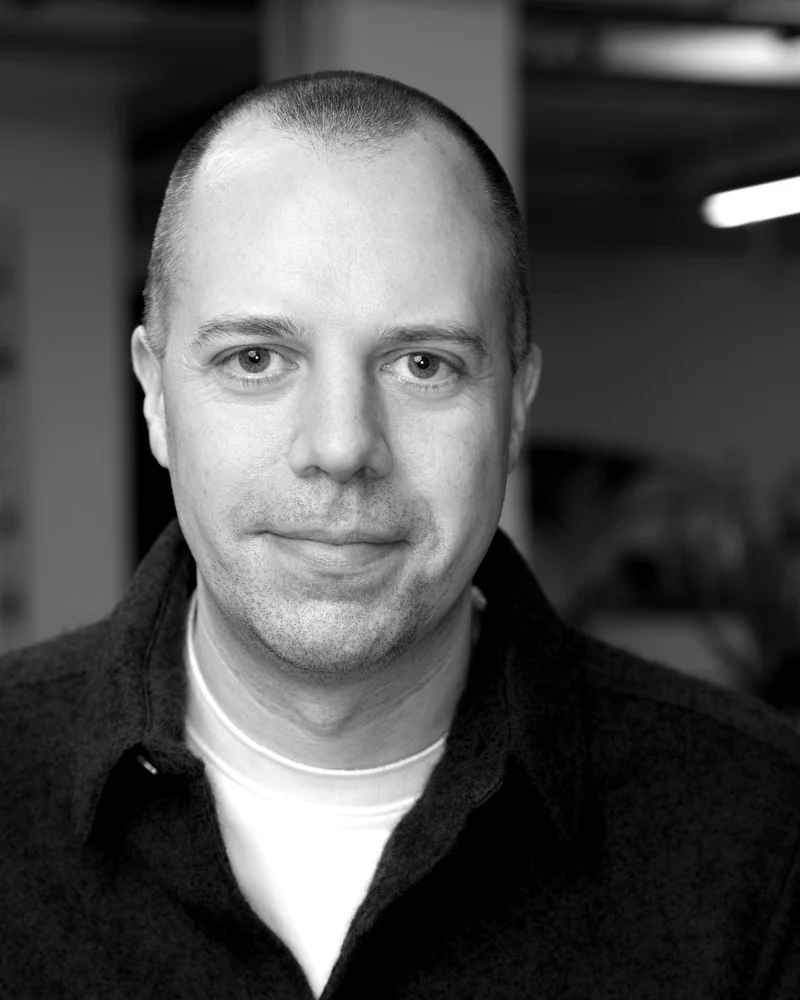
I’m from Leeds. I studied photography at Manchester Metropolitan University, graduating in 2005.
From 2012 to 2015 I took an MA in Photography and Urban Cultures in the sociology department at Goldsmiths, University of London. I wrote my dissertation on Balfron Tower. With the Transition group I showed work on Balfron Tower in 2014, on London’s estates in 2015 and on Robin Hood Gardens in 2016.
I lived in London from 2011 to 2019, and now live about twenty minutes from Milton Keynes.
The photographers I have learned most from are Robert Polidori, Peter Mitchell, John Davies and Bernd and Hilla Becher. Stanley Kubrick taught me most about the frame.
Ethics
Few people appear in these photographs, and nobody is named. Patients’ records are not reproduced, and where others are known to have moved things before I got there, the page says so.